

What Defines Unprocessed Hair: Quality Matters
Finding truly unprocessed hair extensions often feels like searching for a hidden gem, especially when so many products are mislabelled or chemically altered. This matters because authentic hair keeps its natural texture, elasticity, and durability, letting you style with confidence and longevity. Learn how to spot the difference, understand common myths, and make informed choices that protect your investment and ensure you enjoy the benefits of natural texture and integrity with every strand.
Table of Contents
- Unprocessed Hair Definition And Common Myths
- Types Of Unprocessed Hair And Key Distinctions
- Core Features: Cuticle Structure And Sourcing
- Raw Vs. Virgin Hair: The Clear Differences
- How To Identify Genuine Unprocessed Hair
- Risks Of Mislabelled Hair And Buyer Tips
Key Takeaways
| Point | Details |
|---|---|
| Unprocessed Hair Attributes | Authentic unprocessed hair is sourced without chemical treatments and maintains original cuticle alignment, ensuring natural texture and longevity. |
| Common Myths | Misconceptions about the terms “virgin” and “Remy” hair often lead to poor purchasing decisions; verify sourcing and treatment claims. |
| Raw vs. Virgin Hair | Raw hair is collected directly from a single donor with no processing, while virgin hair may have slight alterations, affecting quality and lifespan. |
| Verification Techniques | Always inspect hair for cuticle alignment and request documentation of sourcing to avoid mislabelled products. |
Unprocessed Hair Definition and Common Myths
Unprocessed hair represents the purest form of human hair extensions, sourced directly from donors without chemical manipulation. Unlike processed alternatives, these hair strands maintain their natural texture and integrity from root to tip. Understanding what qualifies as truly unprocessed requires distinguishing between marketing claims and authentic hair characteristics.
The core attributes of unprocessed hair include:
- No chemical treatments or colour alterations
- Original cuticle alignment preserved
- Single donor source
- Natural moisture and protein balance
- Minimal external processing
Contrary to popular misconceptions, virgin hair characteristics extend beyond simple marketing terminology. Many consumers mistakenly believe all hair marketed as “virgin” is automatically unprocessed, which is far from accurate. Authentic unprocessed hair represents an extremely rare commodity in the beauty industry.
Common myths surrounding unprocessed hair often mislead potential buyers. Some widespread misconceptions include believing that all expensive hair extensions are automatically unprocessed or that machine-wefted hair maintains the same quality as manually collected strands. These assumptions can lead to significant disappointment and wasted investment.
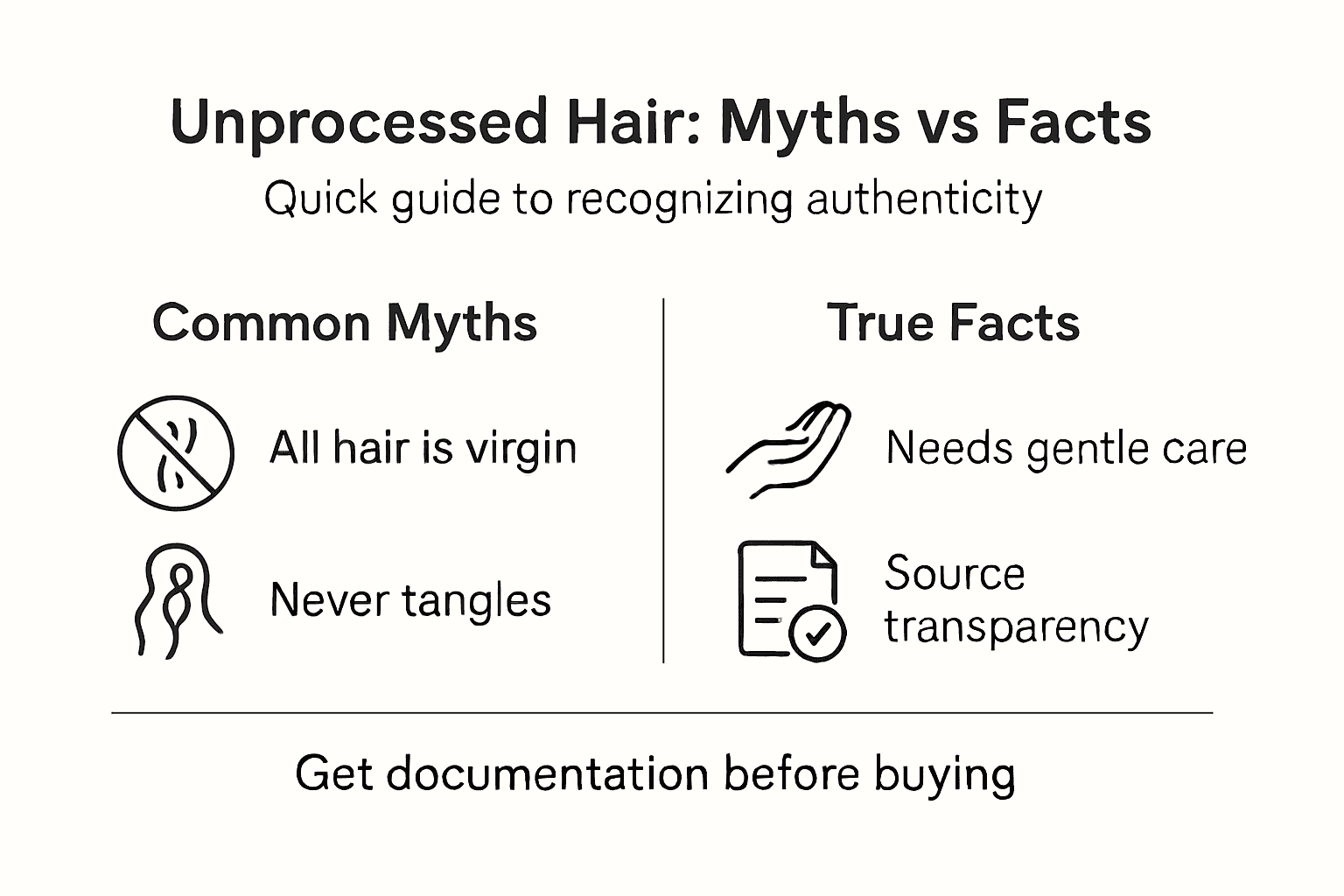
The following table clarifies how authentic unprocessed hair differs from common marketing claims:
| Claim Type | Verification Approach | Reliability for Buyers |
|---|---|---|
| “Virgin” Label | Check for natural colour, no chemical smell | Often misused in marketing |
| “100% Remy” | Inspect cuticle direction and donor consistency | Requires hands-on examination |
| High Price | Request processing documentation | Price does not guarantee authenticity |
| Vendor Reputation | Review detailed sourcing disclosures | Reliable if documentation is provided |
Pro tip: Always request detailed documentation about hair sourcing and processing when purchasing premium hair extensions.
Types of Unprocessed Hair and Key Distinctions
Unprocessed hair encompasses several distinct categories, each with unique characteristics that discern their quality and authenticity. Understanding these raw hair varieties helps consumers make informed purchasing decisions and recognize truly premium hair extensions.
The primary types of unprocessed hair include:
-
Remy Hair: Highest quality unprocessed hair
- Cuticles aligned in same direction
- Minimal tangling and shedding
- Collected from single donor source
-
Virgin Hair: Completely untreated hair
- No chemical processing
- Natural original colour preserved
- Minimal styling or heat exposure
-
Raw Hair: Minimally manipulated hair
- Direct donor collection
- No chemical treatments
- Natural texture maintained
Each hair type presents distinctive qualities that impact its overall performance and longevity. Remy hair stands out as the most premium category, representing meticulously collected strands where cuticle alignment remains consistent throughout the extension. This precision prevents matting and ensures a smooth, natural appearance.
Quality distinctions extend beyond simple categorization. Factors like donor genetics, collection method, and preservation techniques dramatically influence hair extension performance. Professional stylists understand that true unprocessed hair maintains its natural resilience and texture, unlike mass-produced alternatives that undergo extensive chemical treatments.
Pro tip: Always examine hair cuticle alignment and ask about single-donor sourcing before investing in hair extensions.
Core Features: Cuticle Structure and Sourcing
The cuticle structure represents the most critical element in determining hair extension quality, serving as a protective shield for the hair’s inner components. Human hair’s hierarchical structure provides remarkable insights into why unprocessed hair maintains superior performance and aesthetic appeal.
Key components of cuticle structure include:
- Overlapping keratin scales
- Protective outer layer
- Natural moisture retention mechanism
- Directional alignment from root to tip
- Intrinsic elasticity and strength
Unprocessed hair cuticles demonstrate unique characteristics that distinguish them from chemically treated alternatives. Intact cuticle layers create a seamless, natural appearance while preventing excessive tangling and maintaining the hair’s inherent strength. Professional hair specialists recognize that preserving these microscopic protective scales is fundamental to achieving premium hair extension quality.
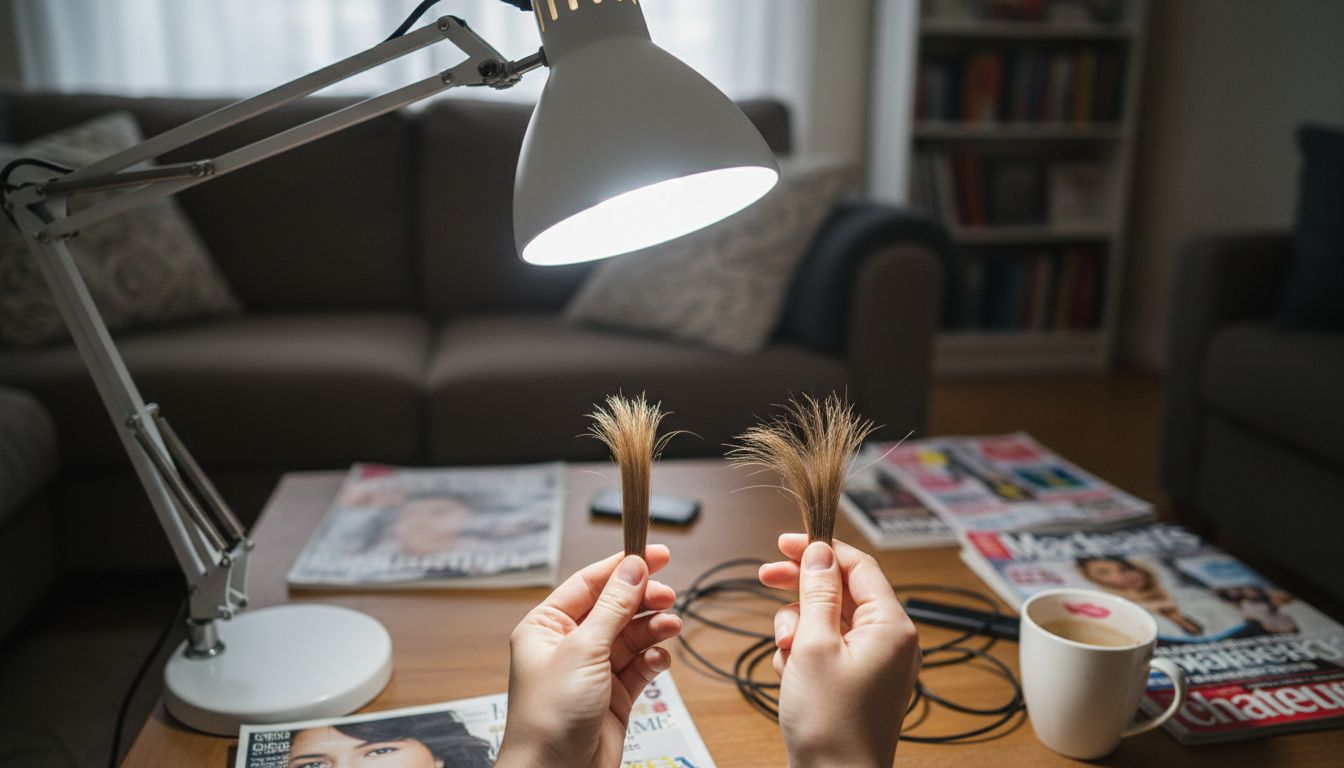
Sourcing plays an equally crucial role in maintaining cuticle integrity. Ethical collection practices involve carefully selecting hair from single donors, ensuring minimal manipulation and maximum preservation of the hair’s natural structure. This meticulous approach prevents cuticle damage and maintains the hair’s original texture, elasticity, and shine.
Pro tip: Examine hair extensions under natural light to assess cuticle alignment and detect any signs of chemical processing or artificial treatments.
Raw vs. Virgin Hair: The Clear Differences
Understanding the nuanced distinctions between raw and virgin hair is crucial for consumers seeking authentic, high-quality hair extensions. Virgin hair characteristics might seem similar to raw hair at first glance, but critical differences exist that significantly impact hair quality and performance.
Key comparative characteristics include:
-
Raw Hair:
- Completely unaltered from donor
- No chemical processing whatsoever
- Single donor source
- Maintains original cuticle alignment
- Minimal environmental exposure
-
Virgin Hair:
- Minimally processed
- No chemical colour treatments
- May come from multiple donors
- Some styling or heat exposure permitted
- Natural colour preserved
The fundamental distinction lies in processing intensity. Raw hair represents the most pristine category, collected directly from a donor with zero manipulation. This means the hair’s natural texture, colour, and structural integrity remain entirely uncompromised. Virgin hair, while high-quality, allows for slight modifications that raw hair categorically prohibits.
Professional stylists and hair enthusiasts recognize that these differences dramatically affect extension longevity, styling versatility, and overall aesthetic performance. Raw hair offers unparalleled authenticity but comes at a premium price point, reflecting its exceptional sourcing and preservation standards.
Use the table below to compare the lasting impact of raw hair versus virgin hair:
| Aspect | Raw Hair | Virgin Hair |
|---|---|---|
| Longevity | Typically 2+ years | Often 1-2 years |
| Styling Options | High heat tolerance, holds styles | Good, but sensitive to repeated styling |
| Resilience | Superior to moisture and stress | May weaken after moderate handling |
| Best For | Long-term natural look | Versatility with minimal care |
Pro tip: Always request detailed documentation about hair sourcing and processing to distinguish between authentic raw and virgin hair extensions.
How to Identify Genuine Unprocessed Hair
Authentic unprocessed hair requires careful examination beyond superficial appearance. Identifying genuine unprocessed hair demands a sophisticated understanding of hair’s natural characteristics and potential manipulation techniques.
Key indicators of genuine unprocessed hair include:
-
Cuticle Alignment:
- Consistent directional orientation
- Intact, unbroken keratin scales
- Natural variations in texture
- No artificial smoothing
-
Origin Verification:
- Single donor sourcing
- Transparent collection documentation
- Minimal processing evidence
- Natural colour variations
- Consistent hair strand characteristics
Professional hair specialists emphasize that true unprocessed hair reveals subtle imperfections that mass-produced extensions deliberately eliminate. Natural hair demonstrates slight inconsistencies in colour, texture, and strand thickness - characteristics that synthetic or heavily processed extensions carefully mask.
Detecting chemical processing requires a multisensory approach. Examine hair texture, assess its response to heat styling, and observe colour variations. Authentic unprocessed hair maintains its inherent resilience, displaying natural movement and resistance to artificial manipulation that chemically treated extensions cannot replicate.
Pro tip: Perform a simple water and heat test by applying minimal heat and observing how the hair responds to determine its authentic, unprocessed nature.
Risks of Mislabelled Hair and Buyer Tips
The hair extension market is fraught with potential deception, where unprocessed hair claims often diverge dramatically from reality. Mislabelled hair represents a significant risk for consumers seeking authentic, high-quality extensions, potentially leading to substantial financial and aesthetic disappointments.
Common risks associated with mislabelled hair include:
-
Structural Compromises:
- Chemical damage hidden beneath surface
- Artificially softened strands
- Reduced natural elasticity
- Premature breakage and tangling
-
Vendor Misrepresentation:
- Mixed donor hair sources
- Undisclosed chemical treatments
- Silicone coating to mask imperfections
- Misleading marketing terminology
- Inconsistent product quality
Discerning buyers must develop a critical approach to hair extension purchases. Authentic hair verification requires more than accepting vendor claims at face value. Professional stylists recommend comprehensive assessment techniques that examine hair’s physical characteristics, including texture consistency, natural variations, and response to minimal styling stress.
Transparency becomes the cornerstone of ethical hair extension purchasing. Reputable vendors should provide detailed documentation about hair sourcing, processing methods, and donor origins. Consumers must remain vigilant, asking pointed questions about collection practices, performing physical tests, and demanding comprehensive evidence of the hair’s authentic, unprocessed nature.
Pro tip: Request a detailed origin certificate and conduct a simple burn test to verify the authenticity of hair extensions before making a purchase.
Discover the True Essence of Unprocessed Hair with Gaurash Hair
If you have been searching for authentic unprocessed hair that maintains its natural cuticle alignment and originates from a single donor source, your journey ends here. At Gaurash Hair, we specialise in providing 100% genuine Indian raw hair that meets the highest standards of quality and natural beauty. Our Indian Raw Hair Bundles – 100% South Indian Temple Hair collection offers the kind of hair that preserves moisture, strength and natural texture just as explained in this article.
Take control of your hair extension experience today by choosing from our premium Raw Hair bundles or explore our full range of luxurious products at Gaurash Beauty Supply. Experience the confidence that comes with hair solutions crafted for resilience, natural shine and long-lasting style. Why settle for less when you can invest in unprocessed hair that truly performs? Shop now to elevate your look with the authenticity you deserve.
Frequently Asked Questions
What is unprocessed hair?
Unprocessed hair refers to human hair extensions that have not undergone any chemical treatments or alterations. This type of hair maintains its natural texture, cuticle alignment, and integrity straight from the donor.
How can I distinguish between unprocessed, virgin, and raw hair?
Unprocessed hair is completely natural with no manipulation, while virgin hair may be minimally processed and can come from multiple donors. Raw hair is directly sourced from a single donor with no alterations, making it the purest form available.
What qualities should I look for in unprocessed hair extensions?
Look for intact cuticles aligned in the same direction, consistent texture, and natural moisture retention. Verify that the hair comes from a single donor and check for minimal signs of chemical processing or treatment.
Why is it important to buy genuine unprocessed hair?
Genuine unprocessed hair offers superior quality, longevity, and natural appearance. Mislabelled hair can lead to disappointment, with structural damages and inconsistencies that can affect styling and overall satisfaction.