

What makes hair extensions durable: expert guide 2026
Many consumers assume all hair extensions offer similar durability, but the reality differs dramatically based on material quality, processing methods, and care routines. Whether you’re a professional hairstylist sourcing for clients or someone seeking personal enhancements, understanding what truly determines extension longevity saves money and ensures satisfaction. This comprehensive guide explores the critical factors that influence how long your hair extensions last, with particular focus on 100% raw and virgin human hair. You’ll discover expert insights on material selection, origin importance, installation techniques, and maintenance practices that maximise durability and value.
Table of Contents
- Understanding Hair Types And Processing: The Foundation Of Durability
- Why The Origin Of Hair Matters: Indian Hair’s Durability Edge
- Hair Extension Types And Installation Methods That Boost Durability
- Maintaining Your Extensions: Care Routines For Maximum Durability
- Find Durable Virgin And Raw Human Hair Extensions At Gaurash Beauty Supply
- What Makes Hair Extensions Durable? Frequently Asked Questions
Key takeaways
| Point | Details |
|---|---|
| Hair type matters most | Virgin and raw human hair extensions significantly outlast synthetic or heavily processed alternatives |
| Origin influences resilience | Indian hair’s natural thickness and cuticle integrity contribute to superior durability and longevity |
| Installation impacts lifespan | Professional application methods like tape-in and fusion extend wearable life when done correctly |
| Maintenance preserves quality | Proper washing, conditioning, and styling routines can double expected extension lifespans |
| Ethical sourcing ensures quality | Responsibly obtained hair maintains structural integrity from collection through final product |
Understanding hair types and processing: the foundation of durability
The fundamental distinction between extension types begins with whether the hair remains virgin or undergoes chemical processing. Virgin Indian hair is unprocessed and retains cuticle alignment, making it highly durable compared to alternatives. Virgin hair means the strands have never been chemically treated, dyed, permed, or bleached, preserving the natural protective cuticle layer that shields each strand.
Raw human hair takes this concept further, representing hair collected directly from a single donor with zero alterations. The cuticles remain intact and aligned in the same direction, preventing tangling and matting that plague lower-quality options. This natural state allows the hair to withstand heat styling, colouring, and daily wear far better than processed counterparts.
Chemical treatments fundamentally weaken hair structure by breaking down the cuticle layer. When manufacturers strip cuticles to create a uniform appearance or apply harsh dyes, they compromise the hair’s natural defences. Processed extensions typically last three to six months with careful use, whilst virgin alternatives often exceed twelve to eighteen months under similar conditions.
Common processed extension types include Remy hair (cuticles intact but chemically treated), non-Remy hair (cuticles removed or mixed directions), and synthetic fibres. Remy extensions might last six to nine months, non-Remy three to five months, and synthetic options rarely exceed three months before visible degradation occurs. Understanding why prefer real hair extensions helps clarify these lifespan differences.
Pro Tip: Request certification or documentation proving virgin status before purchase. Reputable suppliers provide transparency about sourcing and processing history, whilst vague descriptions often indicate chemically altered products marketed deceptively.
Why the origin of hair matters: Indian hair’s durability edge
Geographical origin significantly impacts extension performance due to genetic variations in hair structure and traditional collection practices. Indian hair is known for natural thickness, strength, and cuticle intactness, contributing to superior durability compared to other popular sources. The protein structure in Indian hair naturally resists breakage whilst maintaining softness and flexibility.
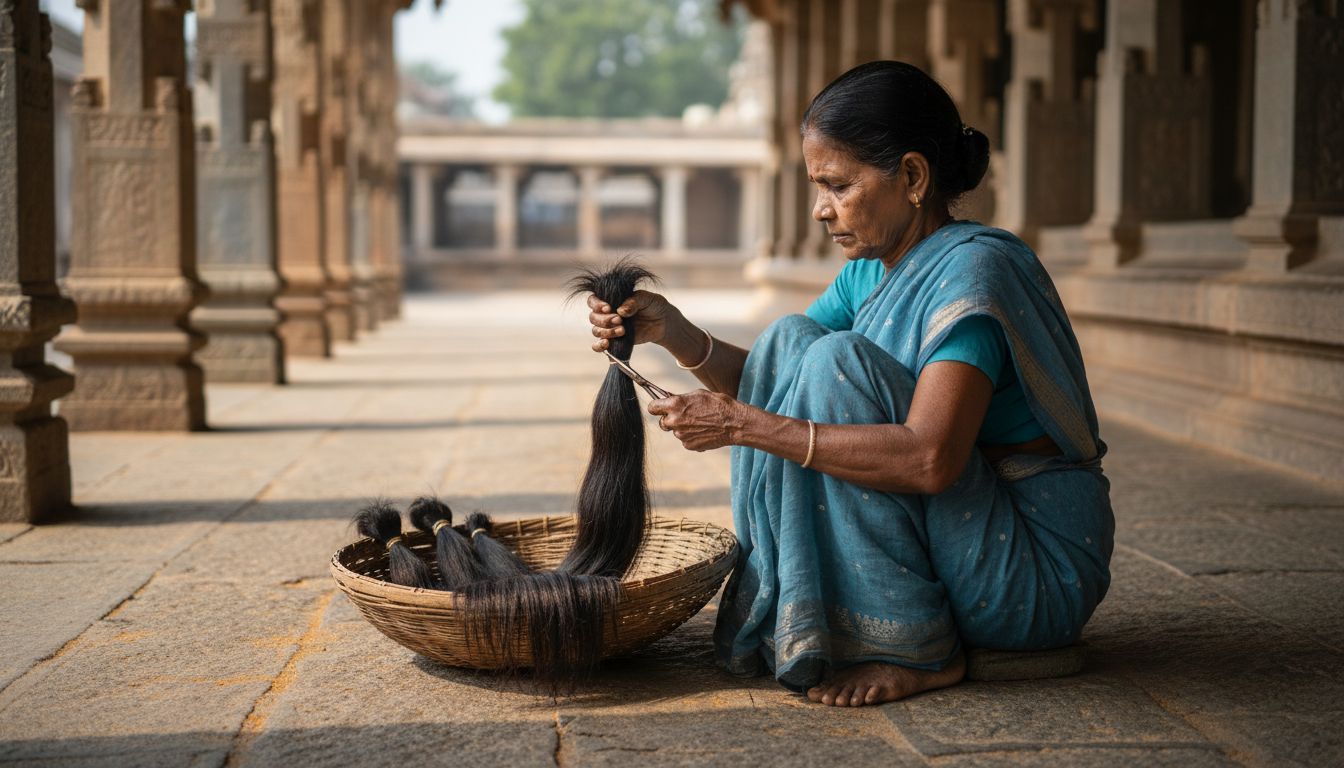
Traditional collection methods in India often involve temple donations where hair is cut in single ponytails, preserving cuticle direction and minimising damage. This contrasts with bulk collection methods elsewhere that mix multiple donors and directions, requiring additional processing that weakens the final product. The cultural significance of hair donation in India also means donors typically maintain healthy, unprocessed hair before offering it.
| Origin | Average Lifespan | Texture Characteristics | Processing Needs | Price Range |
|---|---|---|---|---|
| Indian | 12-18 months | Naturally thick, slight wave, versatile | Minimal, often sold virgin | Medium to high |
| Brazilian | 8-12 months | Coarse, full-bodied, holds curl | Moderate processing common | High |
| Peruvian | 6-10 months | Medium texture, lightweight | Variable processing | Medium |
| Chinese | 6-9 months | Straight, fine, silky | Heavy processing typical | Low to medium |
Ethical sourcing practices directly correlate with hair quality and durability. When suppliers maintain transparent supply chains and fair compensation for donors, they can be selective about hair condition and collection methods. This selectivity ensures only healthy, undamaged hair enters production, whilst exploitative practices often involve collecting damaged or chemically treated hair to meet volume demands.
Key benefits of Indian hair include natural softness that blends seamlessly with most hair types, exceptional strength that withstands daily styling, impressive longevity reducing replacement frequency, and remarkable versatility accepting colour and heat treatments. Understanding luxury Indian hair extensions durability provides deeper insight into these advantages.
Hair extension types and installation methods that boost durability
The extension method you choose dramatically affects how long your investment lasts and how well it performs. Different application techniques distribute weight, stress, and maintenance requirements in distinct ways that either preserve or compromise hair integrity over time.
Tape-in extensions involve sandwiching natural hair between adhesive wefts, creating a semi-permanent bond lasting six to eight weeks before requiring repositioning. Tape-in and fusion extensions generally offer longer durability than clip-in styles when installed properly. The distributed weight prevents excessive stress on individual strands whilst the adhesive protects against friction damage.
Fusion extensions use keratin bonds melted onto small sections of natural hair, creating the most secure and longest-lasting attachment. These can remain in place for three to six months with proper care, and the individual strand application allows for natural movement and styling flexibility. However, removal requires professional expertise to avoid damaging your natural hair.
Clip-in extensions offer temporary solutions you attach and remove daily, eliminating installation stress but requiring careful handling to prevent mechanical damage. Sew-in or weave methods involve braiding natural hair and stitching wefts onto the braids, distributing weight across the scalp rather than individual strands. Lace wigs and closures provide full coverage options that protect natural hair completely whilst offering styling versatility.
- Choose a certified professional with extensive experience in your selected method to ensure proper technique and minimal natural hair damage
- Ensure your natural hair is healthy enough to support extensions, as weak or damaged hair cannot sustain added weight regardless of method quality
- Match extension weight and density to your natural hair capacity, avoiding excessive volume that stresses follicles and accelerates shedding
- Schedule regular maintenance appointments every four to eight weeks depending on method, preventing matting and allowing professional assessment of hair health
- Consider your lifestyle and styling habits when selecting methods, as active lifestyles may benefit from more secure fusion or tape-in options
Pro Tip: Your natural hair condition matters as much as extension quality. If your hair is currently damaged, brittle, or thinning, focus on restoration before adding extensions to prevent further stress and ensure maximum durability of both natural and added hair.
Exploring hair extension longevity explained offers additional guidance on matching methods to your specific needs and expectations.
Maintaining your extensions: care routines for maximum durability
Even the highest quality virgin hair extensions require proper maintenance to reach their full lifespan potential. Daily and weekly care routines directly impact how long your extensions maintain their appearance, texture, and structural integrity before requiring replacement.
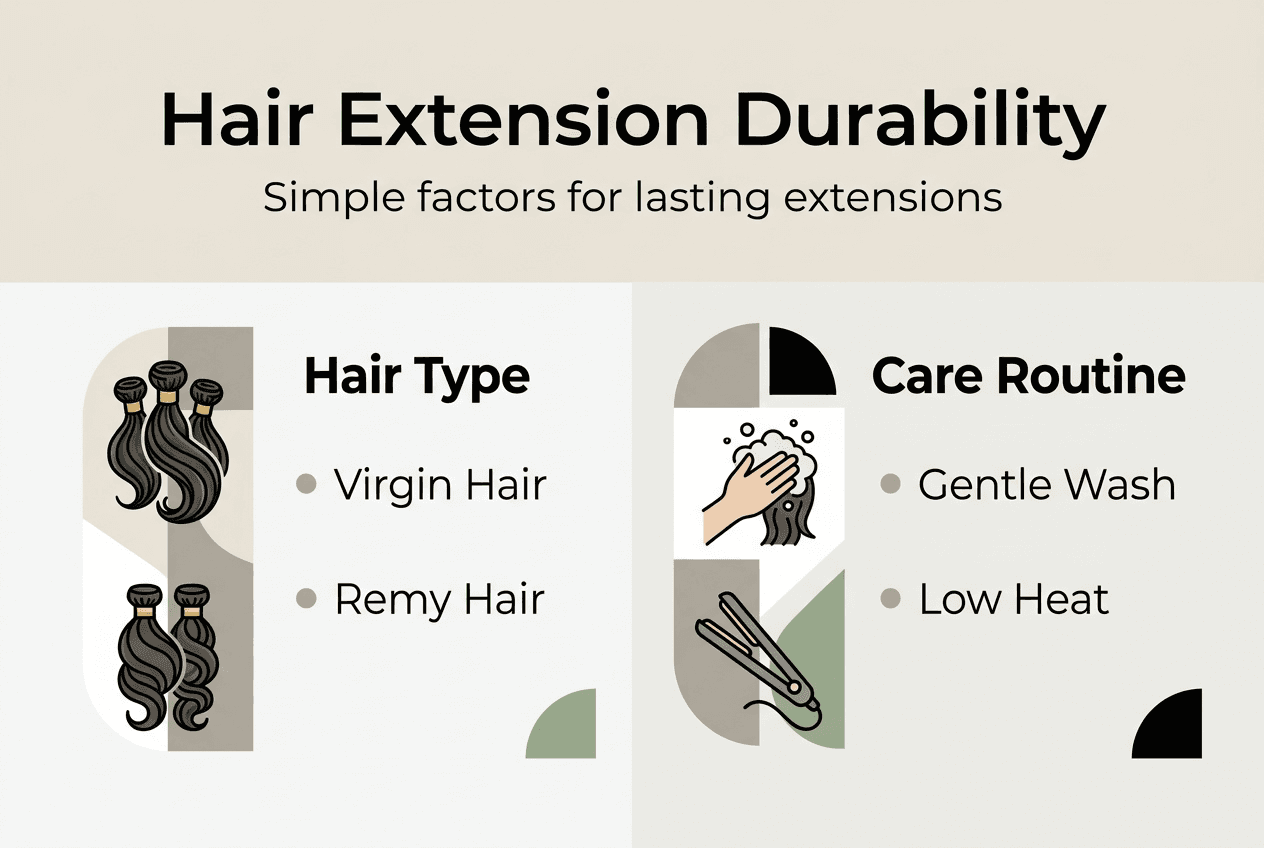
Gentle washing every three to five days prevents natural oil buildup whilst avoiding excessive water exposure that can loosen bonds or cause tangling. Use sulphate-free shampoos that clean without stripping natural oils, and always apply conditioner from mid-length to ends, never at the roots where it can compromise attachments. Pat extensions dry with a microfibre towel rather than rubbing, which creates friction and damages cuticles.
Heat styling should remain moderate, never exceeding 180°C, and always use heat protectant products before applying tools. Allow extensions to air dry partially before blow drying, and alternate between heat styling and heatless methods to minimise cumulative damage. When sleeping, loosely braid or tie hair in a low ponytail using silk scrunchies, and consider a silk pillowcase that reduces friction compared to cotton.
| Care Routine | Virgin Hair Lifespan | Remy Hair Lifespan | Synthetic Lifespan |
|---|---|---|---|
| Optimal care (gentle washing, minimal heat, proper products) | 15-18 months | 9-12 months | 3-4 months |
| Moderate care (regular washing, moderate heat, standard products) | 12-15 months | 6-9 months | 2-3 months |
| Minimal care (frequent washing, high heat, harsh products) | 8-10 months | 4-6 months | 1-2 months |
| Poor care (daily washing, excessive heat, no protection) | 4-6 months | 2-4 months | 3-6 weeks |
Common mistakes that dramatically shorten extension life include brushing from roots to ends instead of working from tips upward, sleeping with wet or damp hair that tangles and mats overnight, using products containing alcohol or sulphates that dry and damage hair structure, and swimming without protection from chlorine or salt water that strips moisture and causes brittleness.
Recommended products specifically benefit raw and virgin extensions by preserving their natural characteristics. Look for moisturising shampoos with natural ingredients like argan oil or coconut oil, deep conditioning treatments applied weekly to restore moisture, leave-in conditioners that provide ongoing protection throughout the day, and wide-tooth combs or specialised extension brushes that detangle without pulling.
Understanding human hair extensions benefits reinforces why proper care matters, as these natural products respond to maintenance similarly to your own hair. Proper maintenance can significantly extend extension lifespan beyond manufacturer estimates when you commit to consistent, gentle care routines.
Find durable virgin and raw human hair extensions at Gaurash Beauty Supply
Now that you understand what makes extensions truly durable, finding products that meet these exacting standards becomes essential. Gaurash Beauty Supply specialises in 100% raw and virgin human hair extensions sourced ethically from India, offering the exact quality characteristics discussed throughout this guide.
Our collection includes virgin Indian straight human hair extensions that maintain their sleek texture through multiple styling sessions, virgin wavy human hair bundles offering natural movement and versatility, and virgin Indian curly human hair bundles that hold their pattern without excessive product use.
Every product features completely unprocessed hair with intact cuticles aligned in one direction, ethical sourcing with transparent supply chains ensuring quality from collection through delivery, salon-quality construction suitable for professional stylists and discerning consumers, and natural characteristics that accept colouring, heat styling, and chemical treatments just like your own hair. Whether you’re a stylist building inventory or someone seeking personal enhancements, our range provides the durability and performance you need.
What makes hair extensions durable? frequently asked questions
How long do virgin human hair extensions typically last with proper care?
Virgin human hair extensions generally last twelve to eighteen months with consistent proper maintenance. Factors like washing frequency, heat styling habits, and sleeping protection significantly impact this range. Some users report extensions remaining usable beyond two years when care routines are exceptionally gentle and thorough.
Can synthetic hair extensions ever match the durability of virgin human hair?
Synthetic extensions cannot match virgin human hair durability due to fundamental material differences. Synthetic fibres typically last one to four months maximum before showing visible wear, tangling, or losing their style. They also cannot withstand heat styling or chemical treatments that human hair tolerates, severely limiting their versatility and practical lifespan.
What are the signs of poor-quality hair extensions to avoid?
Poor-quality extensions exhibit excessive shedding from the weft when gently tugged, tangling or matting after a single wash, unnatural shine indicating silicone coating rather than healthy cuticles, and inconsistent texture throughout the bundle. Additionally, suspiciously low prices compared to market rates almost always indicate compromised quality through heavy processing or mixed hair sources.
How does installation type affect the lifespan of hair extensions?
Installation method impacts both how long extensions stay attached and how well they maintain quality during wear. Fusion bonds last three to six months before requiring removal, tape-ins need repositioning every six to eight weeks but the hair itself lasts much longer, and sew-ins can remain for two to three months. Professional installation always extends lifespan compared to DIY attempts regardless of method chosen.
Are there special products recommended for caring for raw and virgin hair extensions?
Raw and virgin extensions benefit most from sulphate-free, moisturising shampoos, deep conditioning treatments applied weekly, leave-in conditioners with natural oils like argan or jojoba, and heat protectants before any thermal styling. Avoid products containing alcohol, harsh sulphates, or heavy silicones that coat rather than nourish the hair. Natural, gentle formulations preserve the hair’s inherent characteristics and extend usable life significantly.
Recommended
- Top Hair Extension Longevity Tips for Lasting Results – Gaurash Beauty Supply
- Understand Indian hair extension durability in 2026 – Gaurash Beauty Supply
- Hair Extension Longevity: Key Factors and Success – Gaurash Beauty Supply
- 6 Reasons Indian Hair Extensions Last 18 Months Longer – Gaurash Beauty Supply