

Defining virgin hair standards for natural extensions
Choosing virgin hair extensions can feel overwhelming when every supplier claims premium quality yet no universal standards exist. Many consumers and professionals struggle to distinguish authentic virgin hair from processed alternatives marketed under misleading labels. This article clarifies the essential criteria that define genuine virgin hair, explains practical verification methods, and provides realistic benchmarks for texture, durability, and ethical sourcing. You’ll learn how to assess quality markers, interpret grading systems, and apply tests that reveal whether extensions meet professional standards for natural appearance and longevity.
Table of Contents
- Key takeaways
- What defines virgin hair: composition and sourcing
- Essential quality markers: cuticle alignment and verification tests
- Understanding grading systems and longevity benchmarks
- Navigating rare textures and premium verification for high-end buyers
- Explore premium virgin hair extensions at Gaurash Beauty Supply
- FAQ
Key Takeaways
| Point | Details |
|---|---|
| Virgin hair defined | Virgin hair represents human hair that has never undergone chemical processing, meaning no dyeing, bleaching, perming, or relaxing treatments. |
| Single donor sourcing | Single donor sourcing ensures uniform texture and colour across the bundle. |
| Cuticle alignment matters | Cuticles aligned from root to tip prevent tangling and reduce breakage. |
| Verification tests used | Tests such as the float test and the smell test help verify virgin status and durability before purchase. |
| Grading labels caution | Grading labels vary and can be misleading, so verify quality through source transparency and consistent strand appearance. |
What defines virgin hair: composition and sourcing
Virgin hair represents human hair that has never undergone chemical processing, meaning no dyeing, bleaching, perming, or relaxing treatments have altered its structure. This preservation maintains the hair’s natural colour, texture, and most critically, its cuticle integrity. The cuticle layer acts as protective armour, and when left intact, virgin hair can maintain its appearance and strength for over two years with appropriate care.
The sourcing method dramatically impacts quality. Premium standards require single-donor sourcing for uniform texture, ensuring every strand originates from one person’s head. This approach guarantees consistency in colour tone, wave pattern, and thickness throughout the bundle. Multi-donor collections, by contrast, combine hair from multiple sources, creating visible variations that complicate styling and blending.
Consider these distinctions when evaluating virgin hair:
- Chemical-free processing preserves natural protein bonds and moisture balance
- Single-donor hair eliminates texture mismatches that cause tangling
- Intact cuticles reflect light uniformly, creating natural shine
- Unprocessed hair accepts colour treatments and heat styling without immediate damage
Multi-donor hair presents practical challenges beyond aesthetics. When strands from different individuals mix, varying porosity levels cause uneven colour uptake during dyeing. One section may absorb pigment rapidly whilst another resists, producing patchy results. The texture inconsistencies also increase friction between strands, accelerating tangling and requiring more frequent detangling sessions.
“Premium virgin hair maintains its natural state, allowing customers to customise colour and style whilst preserving structural integrity for extended wear.”
Durability directly correlates with cuticle preservation and sourcing method. Virgin hair from a single donor typically withstands daily styling, washing, and environmental exposure for 18 to 30 months. The aligned cuticles create a smooth surface that resists friction and moisture loss, two primary causes of premature degradation. Understanding what is virgin hair helps consumers recognise these quality indicators when shopping.
Pro Tip: Request close-up photos of the weft and ends before purchasing. Single-donor virgin hair shows consistent thickness from root to tip, whilst multi-donor collections often display visible variations in strand diameter.
Essential quality markers: cuticle alignment and verification tests
Cuticle alignment serves as the most reliable indicator of virgin hair quality. In premium extensions, all cuticles must run in the same direction from root to tip. This alignment prevents tangling and reduces breakage by up to 37%, creating extensions that behave like natural hair growing from your scalp. Misaligned cuticles create friction as strands rub against each other, leading to matting within weeks.
Several practical tests reveal whether hair meets virgin standards:
- Float test: Submerge a small section in water. Virgin hair sinks immediately due to its natural protein density, whilst silicone-coated processed hair floats temporarily.
- Smell test: Burn a single strand with a lighter. Human hair produces a distinct keratin scent similar to burning feathers and leaves fine grey ash. Synthetic fibres smell like melting plastic and form hard beads.
- pH test: Virgin hair measures between 3.3 and 4.5 on the pH scale. Higher readings suggest chemical treatment or excessive processing.
- Shedding count: Gently run fingers through a bundle. Losing more than 5-8 strands indicates poor weft construction or damaged cuticles.
- Tensile strength: Hold a wet strand at both ends and pull gently. Virgin hair stretches approximately 30% before breaking, whilst processed hair snaps with minimal force.
Microscopic examination provides definitive proof of cuticle direction. Professional suppliers offer magnified images showing the scale pattern, which should resemble roof tiles pointing toward the ends. Reversed or removed cuticles indicate the hair underwent acid treatment to strip and artificially realign the protective layer, a common practice in lower-grade extensions.
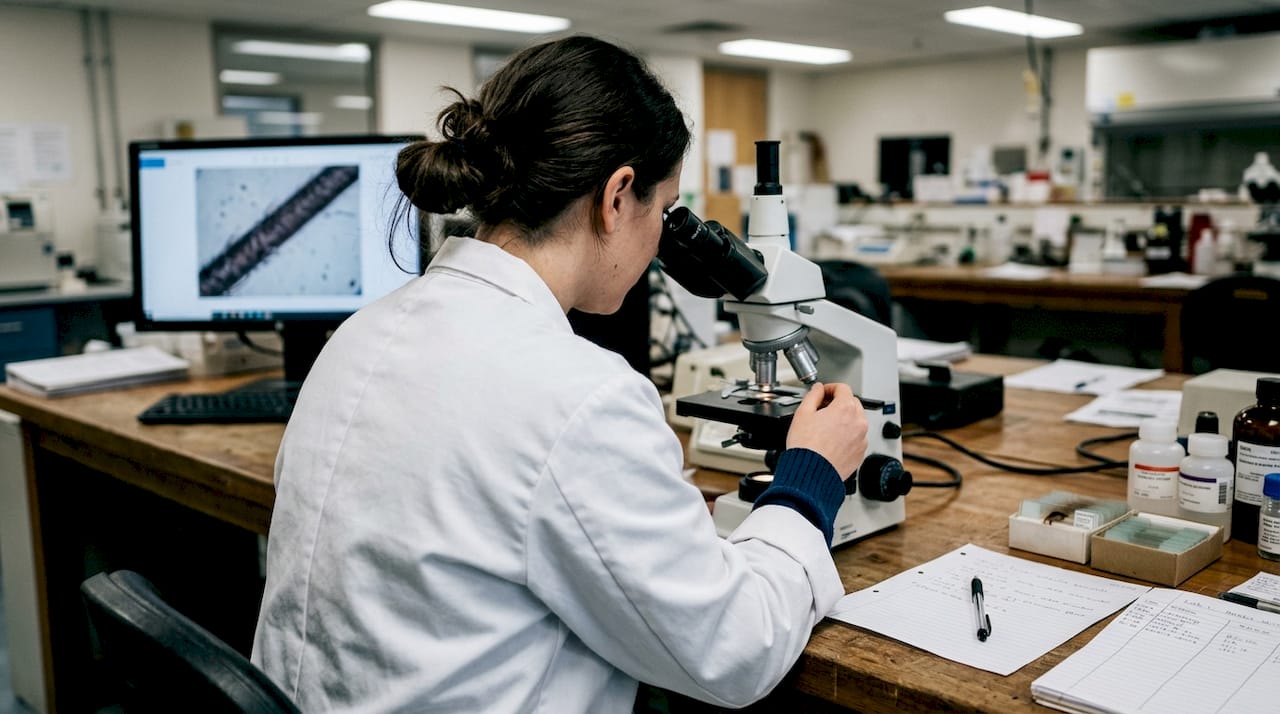
The burn test deserves special attention for its simplicity and accuracy. When you ignite virgin hair, it burns slowly with a steady flame and self-extinguishes quickly. The ash crumbles easily between your fingers. Synthetic or heavily processed hair melts into a sticky residue and produces black smoke with a chemical odour. This test takes 30 seconds but eliminates uncertainty about composition.
Verification methods including microscopy and chemical testing reduce the risk of purchasing processed hair marketed as virgin quality. Many suppliers rely on consumers’ inability to distinguish authentic virgin hair from convincing imitations. Conducting these tests before installation protects your investment and ensures the extensions will perform as expected.
Pro Tip: Perform the water test immediately upon receiving your order. Place the bundle in a basin of room-temperature water without products. Genuine virgin hair absorbs water gradually and feels heavier, whilst coated hair repels moisture initially and may release a slippery residue.
Understanding what is virgin hair through these verification methods empowers you to challenge supplier claims with objective evidence. When vendors resist providing samples for testing or offering detailed origin information, consider it a warning sign of potential quality issues.
Understanding grading systems and longevity benchmarks
Grading labels like 5A through 14A create an illusion of standardisation that doesn’t exist in the virgin hair industry. These designations function as marketing tools, with each supplier defining their own criteria for what constitutes premium quality. No universal grading standards exist, and independent testing reveals that 70% of high-grade bundles fail basic quality validation when examined by third parties.
Suppliers typically assign higher grades to hair with less processing, but the lack of industry oversight means a 10A bundle from one vendor may perform worse than a 7A bundle from another. The grading inflation has accelerated in recent years, with some suppliers now claiming 20A or even 30A ratings without any measurable quality improvement. This arbitrary system forces consumers to evaluate hair based on tangible characteristics rather than letter-number combinations.
Realistic longevity expectations vary by grade and maintenance practices:
| Grade Category | Typical Lifespan | Key Characteristics | Maintenance Requirement |
|---|---|---|---|
| Raw single-donor | 24-36 months | Zero processing, intact cuticles, single source | Moderate; weekly deep conditioning |
| 10A-12A virgin | 12-24 months | Minimal processing, aligned cuticles | Regular; bi-weekly treatments |
| 7A-9A virgin | 8-16 months | Light processing, mostly aligned cuticles | Intensive; weekly treatments |
| 5A-6A virgin | 6-12 months | Moderate processing, partial cuticle alignment | Very intensive; twice-weekly care |
Longevity depends on grade and care, with raw single-donor hair lasting over two years when properly maintained. Premium grades in the 10A-12A range typically deliver 12 to 24 months of wear before showing significant degradation. Lower grades may look appealing initially but deteriorate rapidly once the silicone coating washes out after several shampoos.
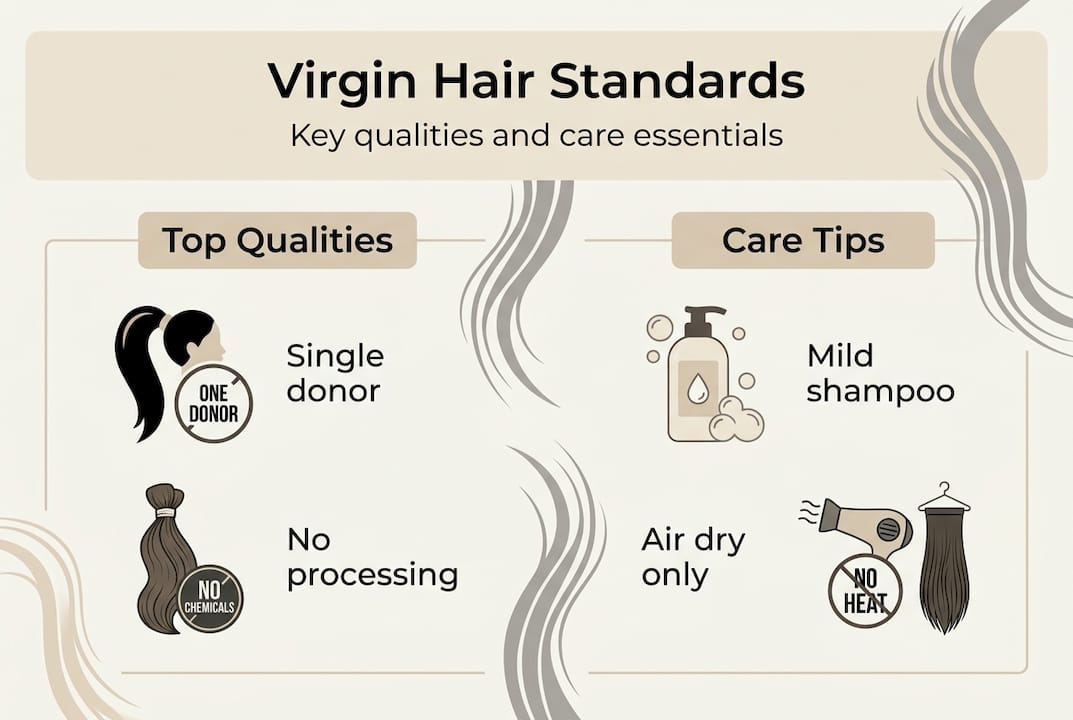
Proper maintenance dramatically extends lifespan regardless of grade. Extensions require sulphate-free shampoos, regular deep conditioning treatments, and protection during sleep. Heat styling should remain below 180°C, and extensions must dry completely before styling to prevent heat damage to wet hair. These practices preserve the cuticle layer and maintain moisture balance, the two factors most critical to longevity.
Pro Tip: Track your extension’s performance monthly by photographing the ends and noting any changes in texture or tangling. This documentation helps you identify the optimal replacement timeline and evaluate whether a supplier’s grade claims match actual durability.
Understanding realistic benchmarks prevents disappointment and helps you budget appropriately. A bundle claiming to last five years at an unusually low price point likely contains processed hair with temporary coatings. Genuine virgin hair commands premium pricing because ethical sourcing, careful processing, and quality control require significant investment. Resources like hair extension longevity tips and hair extension durability expert guide provide detailed maintenance strategies that maximise your investment.
Navigating rare textures and premium verification for high-end buyers
Rare hair textures present unique sourcing and verification challenges that demand heightened scrutiny. Kinky coily textures are difficult to source ethically and verify, as limited supply creates opportunities for sellers to misrepresent processed hair as naturally textured virgin hair. The scarcity of donors with specific curl patterns makes authentication more complex than with straight or wavy varieties.
Texture matching affects how seamlessly extensions blend with your natural hair. A mismatch between your hair’s curl pattern and the extension’s texture creates visible demarcation lines and styling difficulties. Kinky coily hair requires precise matching because the tight curl structure makes inconsistencies more apparent than with looser wave patterns. When extensions don’t match your natural texture, you’ll spend excessive time trying to blend them through heat styling, which defeats the protective purpose of wearing extensions.
Premium buyers should demand comprehensive documentation:
- Certificate of Authenticity (COA) verifying origin and processing history
- Donor affidavits confirming voluntary contribution and fair compensation
- Third-party laboratory reports using FTIR spectroscopy or isotope analysis
- Photographic evidence of hair collection and processing facilities
- Batch traceability codes linking extensions to specific donor groups
Raw hair represents a stricter category than virgin hair, with additional criteria including no steaming or silicone application during manufacturing. Raw hair arrives exactly as cut from the donor, with natural variations in colour tone and texture preserved. This authenticity appeals to professionals seeking maximum versatility for custom colour work and styling.
Laboratory testing provides the highest level of assurance. FTIR (Fourier Transform Infrared) spectroscopy identifies chemical residues invisible to visual inspection, detecting even trace amounts of relaxers, dyes, or coating agents. Isotope analysis determines geographic origin by examining mineral content absorbed during hair growth, confirming whether hair labelled as Indian or Brazilian truly originates from claimed regions.
“Premium verification standards protect high-end buyers from sophisticated fraud, where processed hair receives minimal treatment to pass basic tests whilst still containing chemical modifications that limit longevity and styling options.”
The investment in thorough verification pays dividends through extended wear and superior performance. Extensions that cost 40% more but last twice as long deliver better value than cheaper alternatives requiring frequent replacement. Understanding why choose virgin hair extensions helps justify the premium pricing associated with authenticated, ethically sourced hair.
Pro Tip: Request lab reports dated within 90 days of your purchase. Some suppliers reuse old documentation for multiple batches, which doesn’t guarantee your specific order underwent testing. Current reports with batch-matching codes provide genuine assurance.
Explore premium virgin hair extensions at Gaurash Beauty Supply
Finding verified virgin hair that meets professional standards requires partnering with suppliers who prioritise transparency and ethical sourcing. Gaurash Beauty Supply offers authenticated virgin hair extensions sourced directly from India, with comprehensive documentation supporting each product’s origin and processing history.
Our curated selection includes virgin Indian straight human hair extensions that showcase the natural lustre and smooth texture characteristic of premium single-donor hair. For those seeking movement and body, virgin wavy human hair bundles provide versatile styling options whilst maintaining the natural appearance essential for seamless blending. Clients preferring defined curl patterns appreciate our virgin Indian curly human hair bundles, which deliver consistent texture throughout each bundle.
Every order includes detailed care instructions designed to maximise longevity and preserve the natural characteristics that define authentic virgin hair. Our customer support team provides ongoing guidance for maintenance questions, styling techniques, and product selection tailored to your specific needs.
FAQ
How can I tell if virgin hair is truly unprocessed?
Check for natural colour variation and absence of chemical odours, which indicate zero processing. Perform a float test by placing hair in water; genuine virgin hair sinks immediately whilst coated hair floats. The smell test reveals natural keratin scent when burned, and microscopic examination confirms intact, aligned cuticles pointing in one direction.
Why is single-donor hair preferred over multi-donor collections?
Single-donor hair ensures uniform texture, colour, and porosity throughout the bundle, eliminating the inconsistencies that cause tangling and styling difficulties. Multi-donor collections mix hair from various sources, creating friction between strands with different characteristics. This uniformity reduces maintenance time and extends the extension’s functional lifespan by preventing premature matting.
What longevity can I expect from virgin hair extensions?
Raw single-donor virgin hair typically lasts 24 to 36 months with consistent care, including sulphate-free products and heat protection. Premium grades (10A-12A) deliver 12 to 24 months of wear before requiring replacement. Your maintenance routine dramatically impacts durability; weekly deep conditioning and proper storage preserve cuticle integrity. Review hair extension longevity tips for specific care protocols that maximise lifespan.
Are there special considerations for rare textures like kinky coily virgin hair?
Rare textures require extra verification because limited supply increases fraud risk and makes authentication more challenging. Improper texture matching creates visible blending issues and forces excessive heat styling that damages both extensions and natural hair. Demand laboratory reports, donor affidavits, and certificates of authenticity to confirm ethical sourcing and genuine texture. Understanding why choose virgin hair extensions helps you evaluate whether premium pricing reflects authentic quality for specialised textures.
Recommended
- Why Choose Virgin Hair Extensions: Natural Luxury – Gaurash Beauty Supply
- What Is Virgin Hair? The Key to Natural Softness – Gaurash Beauty Supply
- 7 Essential Qualities of Virgin Hair for Natural Styling – Gaurash Beauty Supply
- 7 Advantages of Virgin Hair for Premium Extensions – Gaurash Beauty Supply