

Synthetic vs human hair extensions: 5 key differences
TL;DR:
- Synthetic hair is made from plastic fibers and may contain harmful chemicals posing health risks.
- Human hair extensions offer a natural look, flexibility in styling, and greater longevity.
- Investing in real hair benefits scalp health, appearance, and cost-efficiency over time.
When most people shop for hair extensions, they assume the differences between synthetic and human hair come down to price. That assumption costs them. The gap between these two types is far wider than most buyers realise, touching on everything from how the hair is made to whether it could be affecting your health. Whether you’re buying for everyday wear, a special event, or professional styling, understanding what separates these two categories will change how you shop and what you expect from your investment.
Table of Contents
- How synthetic and human hair are made
- Appearance, feel, and natural look: What to expect
- Styling, maintenance, and longevity: What makes the difference
- Health, safety, and comfort: What most people overlook
- Our expert perspective: What really matters in choosing hair extensions
- Explore premium human hair extensions and wigs
- Frequently asked questions
Key Takeaways
| Point | Details |
|---|---|
| Choose human hair for daily use | Human hair extensions offer superior styling, comfort, safety, and longevity for everyday wear. |
| Synthetic is for budget or special events | Synthetic extensions may save money up front but are best for occasional use due to appearance and durability limits. |
| Health matters with hair choices | Synthetic fibres can contain harmful chemicals, so opt for verified human hair if you have scalp sensitivities. |
| Appearance and feel differ significantly | Only real human hair truly delivers the natural look and touch most buyers want in extensions. |
How synthetic and human hair are made
Now that you know why choosing the right type matters, let’s start with what these products are actually made of.
Synthetic hair is manufactured from plastic-based fibres, most commonly acrylic, polyester, or nylon. These fibres are machine-shaped and chemically treated to mimic the look of real hair. The result is a product that can be produced quickly and cheaply at scale, which is why synthetic extensions are so widely available at low price points.
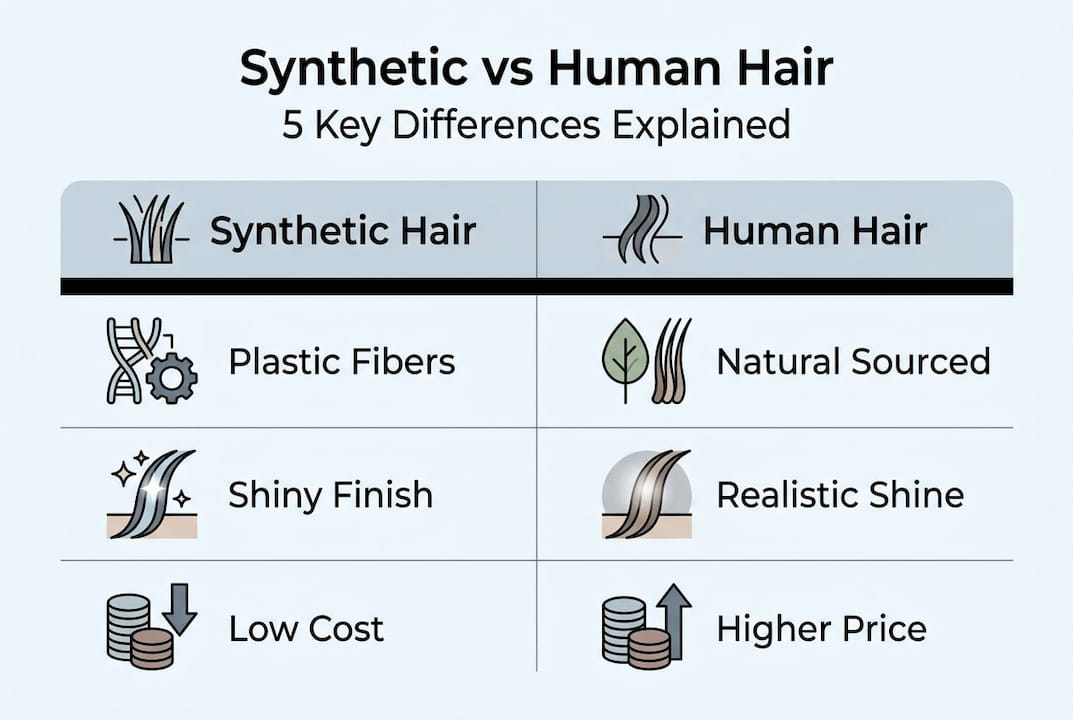
Human hair extensions, by contrast, are collected from real donors. The hair is washed, sorted by direction (cuticle alignment matters enormously for quality), and sometimes lightly processed. Remy hair refers to hair collected with all cuticles intact and aligned in the same direction, which reduces tangling and gives it a far more natural movement. When you’re choosing the best extensions, understanding this distinction is foundational.
Here’s a side-by-side look at the core differences in how each type is made:
| Feature | Synthetic hair | Human hair |
|---|---|---|
| Raw material | Plastic fibres (acrylic, polyester) | Collected from human donors |
| Manufacturing | Machine-shaped, chemically treated | Washed, sorted, minimally processed |
| Cuticle alignment | None | Preserved in Remy hair |
| Chemical exposure | High | Minimal |
| Cost to produce | Very low | Higher |
The manufacturing process also determines safety. Research from Harvard T.H. Chan School of Public Health found that synthetic hair contains carcinogens, lead, and volatile organic compounds (VOCs), with 90 to 100% of tested products affected, posing real health risks through skin absorption and inhalation.
Key differences in raw materials:
- Synthetic: Plastic fibres, chemical coatings, flame retardants
- Human hair: Natural keratin protein, same structure as your own hair
- Remy human hair: Cuticles aligned, minimal chemical processing
- Non-Remy human hair: Mixed cuticle direction, may be more processed
The foundation of what you’re putting on your head matters more than most buyers consider at the point of purchase.
Appearance, feel, and natural look: What to expect
Once you know what you’re working with, let’s look at how each hair type performs visually and to the touch.
Human hair moves the way real hair moves. It responds to humidity, catches light naturally, and blends with your own hair in a way that is genuinely difficult to detect. When you run your fingers through quality human hair extensions, the softness is immediate and unmistakable. The role of hair extensions in achieving a seamless look depends almost entirely on how well the extension matches the behaviour of natural hair.

Synthetic hair, on the other hand, tends to have a slightly plastic sheen. It can look glossy in a way that doesn’t quite match the subdued, varied shine of real hair. In certain lighting, especially natural daylight, the difference becomes obvious. Synthetic fibres are also stiffer, which affects how the hair falls and moves.
| Quality | Human hair | Synthetic hair |
|---|---|---|
| Shine | Natural, varied | Often excessive, plastic-looking |
| Softness | Very soft, natural feel | Can feel coarse or stiff |
| Movement | Mimics real hair | Limited, sometimes rigid |
| Blending | Seamless | Noticeable in some lighting |
| Texture options | Wide range | Limited |
For daily wear and professional settings, this distinction is critical. If you’re wearing extensions to a job interview, a photoshoot, or simply to feel confident every day, the visual and tactile gap between synthetic and human hair is not subtle. According to Remy hair quality experts at Allure, human Remy hair delivers undetectable, natural results and genuine versatility, making it the clear choice for daily wear and styling, while synthetic is better suited to short-term, low-maintenance occasions.
Pro Tip: Always inspect extensions in natural light before purchasing. Look for an even, subdued shine and gently tug a small section to feel how it moves. Stiffness and excessive gloss are the two clearest signs of synthetic fibre.
If a natural look is your goal, exploring extensions for a natural look will help you narrow down the right style and application method for your hair type.
Styling, maintenance, and longevity: What makes the difference
Visual differences are important, but how your hair extensions behave in daily life makes an even bigger impact.
One of the most practical distinctions between synthetic and human hair is what you can actually do with them. Human hair extensions can be curled, straightened, blow-dried, coloured, and treated just like your own hair. You can change your look week to week without buying new extensions. This flexibility is a significant part of what makes human hair worth the higher upfront cost.
Synthetic hair is far more limited. Most synthetic extensions cannot be used with heat tools at all. The plastic fibres will melt or frizz when exposed to high temperatures. Some products are labelled as heat-resistant, but even these can only tolerate low heat and will degrade faster than human hair under regular styling. As styling limitations of synthetic hair are well documented, synthetic extensions also cannot be coloured, which means you’re locked into the shade you buy.
Here’s what each type allows:
Human hair extensions:
- Full heat styling (curling irons, flat irons, blow dryers)
- Colouring and highlighting
- Regular washing with standard hair products
- Conditioning treatments
- Long-term wear of several months to over a year
Synthetic hair extensions:
- No heat styling in most cases
- No colouring
- Gentle washing only
- Limited product use
- Lifespan of a few weeks to a few months
Longevity is where the cost comparison really shifts. A quality set of human hair extensions, cared for properly, can last a year or more. Synthetic extensions typically need replacing within weeks to months. The lasting beauty with human hair that comes from a good set of extensions is simply not achievable with synthetic fibres over time. For a deeper look at how different extension types hold up, the hair extension durability guide breaks it down clearly.
Pro Tip: If you style your hair regularly or change your look often, calculate the total cost over 12 months. Replacing synthetic extensions every two months adds up quickly and often exceeds the cost of one quality human hair set.
Health, safety, and comfort: What most people overlook
But there’s an even more important consideration: how safe and comfortable is your hair choice long-term?
Most buyers focus on price and appearance. Very few stop to ask what the extensions are actually doing to their scalp and skin. This is where synthetic hair raises serious concerns.
Research confirms that synthetic hair contains carcinogens and harmful substances including lead and VOCs, with 90 to 100% of tested products showing contamination. These chemicals can be absorbed through the scalp or inhaled during application, particularly when heat is applied. For anyone wearing extensions daily, that’s not a trivial risk.
“Synthetic braiding hair used by Black women contains dangerous chemicals, including known carcinogens and endocrine disruptors, raising serious public health concerns for frequent users.” — Harvard T.H. Chan School of Public Health
Human hair, by contrast, is naturally hypoallergenic. It’s made of the same keratin protein as your own hair, which means your scalp is far less likely to react negatively. For people with sensitive scalps, allergies, or conditions like alopecia, human hair is not just preferable, it’s the responsible choice. The reasons to prefer real hair extensions go well beyond aesthetics when you factor in long-term scalp health.
Key safety considerations:
- Synthetic hair: May contain lead, flame retardants, VOCs, and carcinogens
- Human hair: Composed of natural keratin, no synthetic chemical coatings
- Scalp sensitivity: Human hair is far less likely to cause irritation or allergic reaction
- Daily wear risk: Synthetic fibres in prolonged contact with skin carry a cumulative exposure risk
- Medical hair loss: Human hair is the recommended choice for those with scalp conditions
Additionally, a statement from the U.S. House of Representatives highlights that even heat-resistant synthetic options, while improving, remain inferior in safety and should be avoided for sensitive scalps due to their chemical composition.
Our expert perspective: What really matters in choosing hair extensions
Here’s what years of working with hair extensions teaches you: most buyers make the wrong trade-off. They see the lower price of synthetic hair and assume they’re being smart with money. But they’re not accounting for the full picture.
The real cost of synthetic extensions includes the discomfort of a stiff, plastic feel, the frustration of not being able to style freely, the expense of replacing them every few months, and the health risk of chemical exposure you may not even notice until it becomes a problem. When you add all of that up, synthetic hair is rarely the bargain it appears to be.
No synthetic technology currently available truly replicates the feel, movement, and longevity of ethically sourced human hair. That’s not a marketing claim. It’s a material fact. And for anyone wearing extensions daily or styling regularly, the gap is felt every single day.
Our honest recommendation is this: invest in quality if your extensions are part of your regular routine. Your scalp, your confidence, and your long-term budget will all benefit. If you’re still weighing your options, reading about choosing natural hair extensions will give you a grounded, practical framework for making the right call.
Explore premium human hair extensions and wigs
Ready to experience premium quality for yourself? Here are trusted options hand-picked for the most natural results.
At Gaurash Hair, every extension is crafted from 100% raw and virgin Indian human hair, ethically sourced and minimally processed to preserve its natural softness and movement. Whether you prefer a sleek finish or a relaxed wave, there’s a texture and length suited to your style.

Explore straight human hair extensions for a polished, versatile look, or discover the effortless texture of wavy human hair bundles that blend beautifully with most natural hair types. Browse the full range at Gaurash Hair to find bundles, wigs, closures, and frontals designed for both everyday wear and professional salon use, with fast global shipping available.
Frequently asked questions
Can synthetic hair extensions be styled with heat tools?
Most synthetic hair cannot be heat styled at all, and even heat-resistant varieties only tolerate low temperatures before the fibres begin to degrade. Human hair handles full heat styling without damage when used with proper products.
Are synthetic hair extensions safe for sensitive scalps?
Many synthetic extensions contain harmful chemicals including lead and VOCs, which can irritate sensitive scalps through prolonged skin contact. Human hair is naturally hypoallergenic and is the safer choice for anyone with scalp sensitivity or allergies, as confirmed by research on synthetic hair chemicals and a congressional safety statement.
How long do human hair vs synthetic hair extensions last?
Human hair extensions can last several months to well over a year with proper care, while synthetic extensions typically need replacing within weeks to a few months. The longevity of Remy hair makes it the more cost-effective option for regular wear over time.
Do synthetic hair extensions look natural?
Synthetic hair often has an unnatural plastic sheen and limited movement, making it noticeably different from real hair in daylight. Human Remy hair blends seamlessly and moves like your own hair, delivering results that are genuinely undetectable in most settings.
Recommended
- Natural vs synthetic hair: choosing the best extensions – Gaurash Beauty Supply
- Why Use Human Hair Extensions for Lasting Beauty – Gaurash Beauty Supply
- Why Prefer Real Hair Extensions for Lasting Beauty – Gaurash Beauty Supply
- Why Choose Natural Hair Extensions for Lasting Beauty – Gaurash Beauty Supply
- Role of Collagen in Hair Health – Science and Benefits