

How to care for virgin hair: expert steps for shine
TL;DR:
- Virgin hair requires careful routine, tools, and products to maintain its quality and longevity.
- Consistency and gentle handling are key to ensuring extensions stay lustrous and durable over time.
- Using the right care routine and high-quality products can significantly extend the life of virgin hair extensions.
You invest in premium virgin hair extensions expecting gorgeous, long-lasting results. Then, a few weeks in, you notice dullness, tangling, or unexpected shedding. It is a frustrating experience that many extension wearers share. The good news is that it is almost always preventable. Virgin hair is genuinely different from processed extensions, and it responds exceptionally well to the right routine. This guide walks you through exactly what virgin hair needs, from the tools on your bathroom shelf to the daily habits that keep your extensions looking salon-fresh for months longer than you might expect.
Table of Contents
- What is virgin hair and why does care matter?
- What you need to care for virgin hair
- Step-by-step routine: how to wash, dry, and style virgin hair
- Troubleshooting and avoiding common mistakes
- The real secret to flawless virgin hair extensions
- Find premium virgin hair and expert resources
- Frequently asked questions
Key Takeaways
| Point | Details |
|---|---|
| Use gentle products | Always use sulphate-free shampoo and light products to keep hair healthy. |
| Routine trumps trends | Consistent, simple care keeps virgin hair soft and shiny longer than chasing fads. |
| Detangle with care | Start from the bottom with a wide-tooth comb to minimise breakage. |
| Protect from heat | Always apply heat protectant and limit use of hot styling tools. |
What is virgin hair and why does care matter?
Virgin hair is 100% human hair that has never been chemically treated. No dye, no bleach, no relaxers, and no perms. It comes straight from the donor in its natural state, which means every strand retains its original strength, moisture balance, and cuticle layer. Understanding virgin hair standards is the first step to appreciating why your care routine needs to match that quality.
Within the world of virgin hair, the term Remy refers to how the strands are collected and aligned. In Remy hair, all cuticles run in the same direction from root to tip. This alignment is critical. As extension types overview explains, Remy minimises matting while non-aligned cuticles cause quicker tangling and a rougher texture over time. Virgin Remy is the gold standard because it combines unprocessed quality with cuticle alignment.
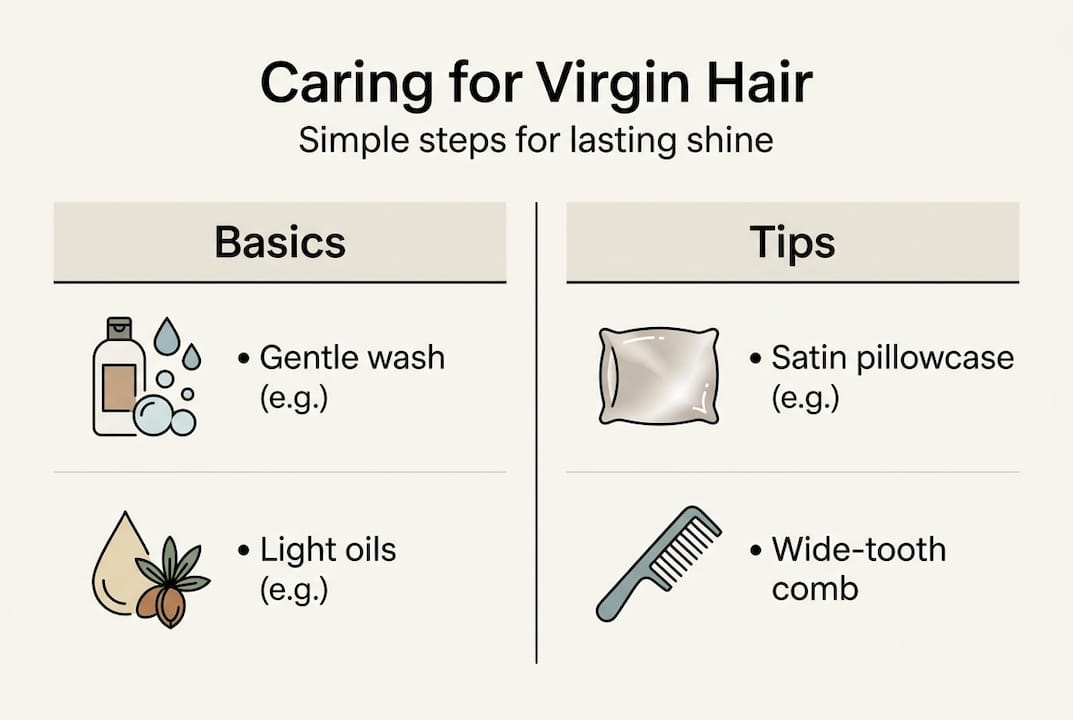
The advantages of virgin hair go well beyond aesthetics. Because it has not been chemically altered, it holds moisture naturally, blends seamlessly with your own hair, and responds to styling much like your biological strands would. That said, it is not indestructible. Without proper care, even the finest virgin hair will show signs of wear.
Here is a quick comparison to keep in mind:
| Hair type | Cuticle alignment | Chemical treatment | Longevity with care |
|---|---|---|---|
| Virgin Remy | Yes | None | 12 to 24 months |
| Non-Remy | No | Often | 3 to 6 months |
| Synthetic | N/A | N/A | 1 to 3 months |
The main threats to virgin hair extensions include:
- Excessive heat from flat irons and curling wands without protection
- Harsh products containing sulphates, alcohols, or heavy silicones
- Rough handling during washing or detangling
- Repeated installation and removal cycles without recovery time
- Sleeping on wet hair, which promotes matting overnight
Understanding Remy hair explained in detail will help you make smarter purchasing decisions and set realistic care expectations from day one.
What you need to care for virgin hair
Having the right tools is half the battle. Many people damage their extensions simply by reaching for whatever shampoo or brush is already in the shower. Virgin hair deserves a dedicated kit, and assembling one does not need to be expensive or complicated.
Essential tools and products:
- Wide-tooth comb for gentle detangling
- Soft-bristle extension brush (loop brushes work especially well)
- Sulphate-free shampoo to preserve moisture without stripping
- A rich, lightweight conditioner focused on mid-lengths and ends
- Heat protectant spray rated for at least 230°C
- Microfibre towel to blot without friction
- Silk or satin pillowcase to reduce overnight tangling
- Alcohol-free styling sprays for hold without drying
- Light natural oils such as argan or jojoba for shine and softness
Here is a practical overview of what each product does for your extensions:
| Product | Purpose | Frequency |
|---|---|---|
| Sulphate-free shampoo | Cleanses without stripping natural oils | Every 1 to 2 weeks |
| Conditioner | Restores moisture and smooths cuticles | Every wash |
| Heat protectant | Shields strands from thermal damage | Every heat session |
| Light natural oil | Adds shine and reduces frizz | 2 to 3 times per week |
| Silk pillowcase | Reduces friction during sleep | Nightly |
For guidance on maintaining hair bundles long-term, the type of products you choose matters as much as how you use them. Avoid anything with heavy waxes or mineral oils, as these coat the cuticle and attract lint and dust.
Pro Tip: Experts recommend air-drying over heat drying whenever possible, and always applying a heat protectant before any thermal styling tool touches your extensions.
If you are new to wearing extensions, reviewing a full guide on prepping for extensions before installation will save you from common early mistakes. The right foundation makes every subsequent care step more effective.

Step-by-step routine: how to wash, dry, and style virgin hair
A consistent routine is what separates extensions that last six months from ones that last two years. Follow these steps every wash day to keep your virgin hair looking its best.
- Detangle before wetting. Use your wide-tooth comb or loop brush to gently work through any knots, starting at the ends and moving upward. Never start at the roots.
- Rinse with lukewarm water. Hot water opens the cuticle aggressively and accelerates moisture loss. Lukewarm water is gentler and just as effective at removing buildup.
- Apply shampoo to the strands, not the roots. For sewn-in or tape-in extensions, focus the shampoo along the length of the hair. Rubbing product into the roots or bonds causes matting and weakens attachment points.
- Rinse thoroughly. Leftover shampoo residue is one of the most common causes of dullness and buildup. Take an extra 30 seconds to rinse completely.
- Condition from mid-length to ends. Leave conditioner on for two to three minutes. Keep it well away from any bonds or wefts to avoid loosening them.
- Blot dry with a microfibre towel. Never rub. Blotting removes excess water without roughing up the cuticle layer.
- Air-dry whenever possible. If you must use a blow dryer, use a low heat setting and keep the nozzle moving. Limiting high heat is one of the most impactful habits you can build for extension longevity.
- Style with a heat protectant. Apply it evenly before using any curling wand or flat iron.
- Trim ends every 6 to 8 weeks. Even virgin hair develops split ends with regular styling. Trimming prevents splits from travelling up the shaft and causing further damage.
Warning: Never apply oily or creamy products directly to the roots of sewn-in or tape-in extensions. Product buildup near bonds weakens adhesion and can lead to premature slippage.
For a deeper look at daily habits, our extension care guide covers everything from protective styles to seasonal adjustments. And if you want creative ideas, explore styling virgin hair for techniques that look stunning without sacrificing hair health.
Troubleshooting and avoiding common mistakes
Even with a solid routine, problems can creep in. Knowing how to spot and address them early is what keeps your extensions in top condition.
Common mistakes that shorten extension life:
- Overusing heat tools without adequate protection
- Skipping regular trims and letting split ends travel upward
- Using products with heavy alcohols or sulphates that strip moisture
- Conditioning near bonds on bonded or tape-in extensions
- Sleeping with wet hair, which causes severe overnight matting
- Wearing extensions too tight, which creates tension and breakage at the attachment points
As clip-ins vs. tape-ins comparisons show, different installation methods require different care approaches. Clip-ins are easiest to maintain because you remove them daily, while tape-ins and sew-ins demand more careful attention to bonds and roots. Understanding which type you have changes how you approach every step of your routine.
For a detailed breakdown of the pros and cons of each method, our guide on bundles vs clip-ins is a useful starting point. If you want to extend the life of your current set, extension longevity tips and extension durability tips offer practical, tested strategies.
To revive dull extensions, try a light argan oil treatment on dry hair, focusing on the mid-lengths. For shedding, check that your wefts are properly sealed and that you are not over-brushing when the hair is wet and fragile.
Important: Not every product marketed for hair is safe for virgin extensions. Many volumising sprays and dry shampoos contain alcohols or starches that coat the cuticle and cause long-term dullness. Always check ingredient lists before introducing a new product to your routine.
The real secret to flawless virgin hair extensions
Here is something the beauty industry rarely tells you: the most common reason virgin hair extensions lose their lustre has nothing to do with product quality. It is inconsistency. Clients who switch products every few weeks chasing the latest viral recommendation almost always see worse results than those who stick to a simple, gentle routine.
Experienced stylists see this pattern constantly. Someone buys exceptional extensions, then layers on a cocktail of trending treatments, heat tools, and overnight masks. Within two months, the hair looks exhausted. Meanwhile, someone else with the same extensions uses a sulphate-free shampoo, a light conditioner, and a silk pillowcase every night. Their hair still looks fresh at the six-month mark.
The truth is that patience and consistency are the most powerful tools you have. Gentle shine maintenance insights matter far more than any single miracle product. Virgin hair is already exceptional. Your job is simply not to undo that quality with rushed decisions or over-styling.
Find premium virgin hair and expert resources
Starting with quality extensions makes every care step more rewarding. When your hair is genuinely unprocessed and ethically sourced, it holds moisture better, styles more easily, and lasts significantly longer with the same routine.

At Gaurash Hair, we offer a curated selection of premium options to suit every style. Explore virgin Indian straight hair for a sleek, polished look, or discover the natural movement of virgin wavy bundles that blend beautifully with most textures. If you are looking for a full transformation, browse our hair wig options for versatile, ready-to-wear styles. Pair any purchase with our in-depth blog guides to get the most from your investment from day one.
Frequently asked questions
How often should I wash virgin hair extensions?
Wash your virgin hair extensions every 1 to 2 weeks, adjusting based on styling frequency and product buildup. Overwashing strips natural oils and shortens the life of your extensions, so less is often more.
Can I dye or bleach virgin hair extensions?
Yes, you can colour or bleach virgin hair, but it is best done professionally to prevent damage. Because virgin hair is unprocessed, it accepts colour more evenly than chemically treated alternatives.
What is the best way to detangle virgin hair?
Start at the ends with a wide-tooth comb and gently work up to the roots to avoid breakage. Always detangle before washing, when the hair is dry and easier to manage without snapping.
Do I need special products for virgin hair?
Use sulphate-free shampoo, light natural oils, and alcohol-free styling sprays for the best results. Experts also recommend using heat protectant every time you use any thermal styling tool.
How do I avoid matting and tangling with virgin hair?
Avoid sleeping on wet hair, detangle regularly, and use a silk pillowcase to reduce friction. Choosing Virgin Remy minimises matting compared to non-aligned alternatives, so sourcing quality hair from the start makes a real difference.
Recommended
- How to Maintain Virgin Hair Bundles Naturally for Shine – Gaurash Beauty Supply
- How to style virgin hair extensions: 40% longer look – Gaurash Beauty Supply
- 7 Essential Qualities of Virgin Hair for Natural Styling – Gaurash Beauty Supply
- Hair extension care guide: Keep your style flawless – Gaurash Beauty Supply
- Lock Hair Shampoo & Conditioner – Didis Beauty Center