

Hair extension care guide: Keep your style flawless
Few things are more frustrating than watching your hair extensions lose their lustre within weeks of installation. The softness fades, tangles appear, and that natural movement you loved starts to disappear. The good news is that most of this damage is completely preventable. With the right tools, the right products, and a consistent routine, your extensions can stay looking salon-fresh for months longer than you might expect. This guide walks you through everything from initial setup to troubleshooting, giving you hands-on strategies backed by real experience with premium human hair.
Table of Contents
- Gathering tools and prepping your hair extensions
- Step-by-step washing and conditioning routine
- Drying, detangling, and styling extensions safely
- Maintaining longevity: Night, weekly, and monthly routines
- Troubleshooting and common care mistakes to avoid
- Why real hair and expert care matter
- Explore premium solutions for beautiful, lasting extensions
- Frequently asked questions
Key Takeaways
| Point | Details |
|---|---|
| Preparation is crucial | Setting up with the right tools and products prevents tangling and damage from the very start. |
| Gentle care extends life | Regular, careful washing and detangling keep hair extensions soft, shiny, and natural-looking. |
| Consistent routines matter | Nightly, weekly, and monthly habits are key to keeping extensions looking fresh and beautiful over time. |
| Avoid common mistakes | Steering clear of heat damage and product build-up can double your extension’s lifespan. |
| Choose quality products | High-grade, real hair extensions paired with expert maintenance deliver the best results. |
Gathering tools and prepping your hair extensions
Before you touch a single strand, getting your supplies in order makes a significant difference. Proper preparation prevents damage and improves results when caring for hair extensions, so skipping this step costs you in the long run.
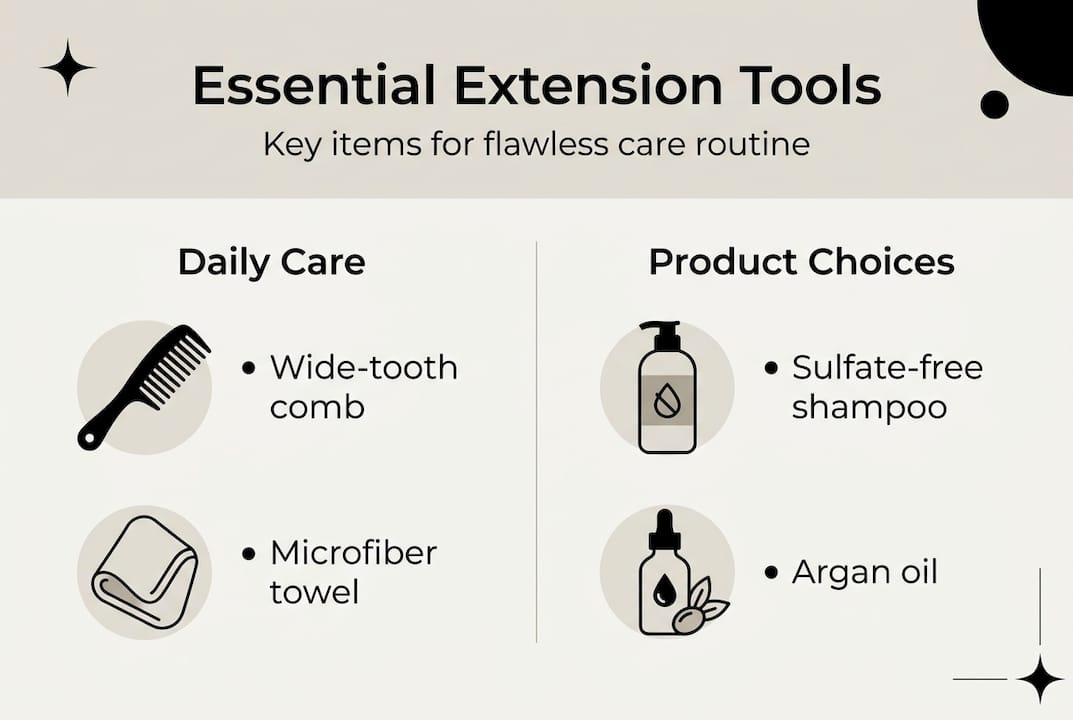
Here are the essential tools every extension wearer should have on hand:
- Wide-tooth comb or loop brush: Designed to glide through extensions without snagging or pulling at the bonds
- Sulfate-free shampoo: Sulfates strip moisture and can loosen bonding adhesive over time
- Hydrating conditioner and deep conditioning mask: Replenishes moisture lost between washes
- Microfibre towel: Absorbs water gently without causing friction-related frizz
- Heat protectant spray: A non-negotiable barrier before any hot tool use
- Silk or satin scrunchies: Holds hair without the tension that damages wefts
Organising your workspace matters too. Lay your tools on a clean, flat surface before you begin. When extensions are loose or detached, keep them separated to avoid unnecessary tangling. A simple hook or extension hanger works well for clip-ins while you work through each piece.
| Tool | Purpose | Why it matters |
|---|---|---|
| Wide-tooth comb | Detangling | Reduces breakage at the root |
| Sulfate-free shampoo | Cleansing | Preserves bonds and moisture |
| Microfibre towel | Drying | Minimises friction and frizz |
| Deep conditioning mask | Moisture restoration | Prevents dryness and brittleness |
| Heat protectant | Styling prep | Shields cuticles from heat damage |
For extensions that need recommended extension-safe treatments, pairing professional-grade products with your home routine gives the best results. Investing in quality tools upfront saves you from replacing extensions prematurely.
Pro Tip: Store your extension tools separately from your regular hair tools. Cross-contamination from products designed for natural hair can leave residue on extensions that is difficult to remove.
Step-by-step washing and conditioning routine
With your tools and products prepped, it is time to begin the washing process itself. A gentle washing routine is key to maintaining the softness and natural movement of hair extensions, and the order in which you do things matters just as much as the products you choose.
- Detangle first. Before any water touches your extensions, work through them with a wide-tooth comb. Start at the tips and move upward in small sections.
- Wet with lukewarm water. Hot water opens the cuticle too aggressively and can cause shedding. Lukewarm is the sweet spot.
- Apply shampoo in a downward motion. Work the shampoo from the top of the weft downward, never scrubbing in circular motions.
- Rinse thoroughly. Leftover shampoo creates buildup that dulls the hair over time.
- Apply conditioner from mid-length to tips. Keep conditioner away from the roots or bonds to avoid slippage.
- Leave for 3 to 5 minutes, then rinse. For deeper hydration, use a conditioning mask once a week in place of your regular conditioner.
Never apply conditioner directly to extension bonds or tape areas. This is one of the most common reasons extensions slip out prematurely.
Two mistakes people make most often are rough towel drying and using the wrong water temperature. Scrubbing with a regular towel creates friction that roughens the cuticle and leads to frizz. Instead, gently squeeze water out with your microfibre towel and let gravity do the rest.
If you are still deciding between extension types, understanding why choosing real hair matters will help you see why human hair responds so much better to this kind of gentle care. Synthetic fibres simply cannot recover from the same washing process.
Pro Tip: Add a few drops of argan oil to your conditioner before applying it. This boosts moisture retention without weighing the hair down, which is especially helpful for longer extensions.
Drying, detangling, and styling extensions safely
Once your extensions are clean, attention shifts to gentle drying, detangling, and adding your personal flair. This stage is where a lot of people unknowingly cause the most damage, so it is worth slowing down here.

Proper detangling techniques reduce breakage and can double the lifespan of quality hair extensions. The method is simple: always start at the tips and work your way up to the roots. Never drag a comb from root to tip on wet extensions.
| Method | Pros | Cons |
|---|---|---|
| Air drying | No heat damage, preserves bonds | Takes longer, can cause mild frizz |
| Blow drying (low heat) | Faster, adds volume | Risk of heat damage if overused |
| Diffuser attachment | Gentle airflow, good for waves | Not ideal for straight styles |
For heat styling, keep your tools below 180°C. Extensions do not have the natural oil production of your scalp to protect them, so they are more vulnerable to heat damage than your natural hair. Always apply heat protectant before using a flat iron or curling wand.
Here are the key rules for safe heat styling:
- Never use heat tools on wet or damp extensions
- Use a lower temperature setting than you would on your natural hair
- Move tools continuously rather than holding them in one spot
- Allow extensions to cool completely before brushing or touching
For styling inspiration that works with your extension type, exploring different looks before committing to a style helps you plan your heat use more strategically.
Maintaining longevity: Night, weekly, and monthly routines
Proper drying and styling are essential, but true extension longevity comes from consistent routines outside the salon. A consistent care regimen is the most reliable way to extend the life of hair extensions, and building that into your existing habits makes it far easier to stick with.
| Routine | Action | Benefit |
|---|---|---|
| Nightly | Braid loosely, cover with silk bonnet | Prevents tangling and friction |
| Weekly | Deep conditioning treatment | Restores moisture and shine |
| Monthly | Professional maintenance check | Catches slippage or damage early |
Here is a simple numbered routine to follow each week:
- Night 1 to 7: Loosely braid or plait extensions before bed. Place a silk or satin bonnet over your hair to reduce friction against your pillow.
- Day 7: Wash and deep condition using the routine outlined above.
- Day 14: Apply a lightweight leave-in treatment to restore moisture between washes.
- Monthly: Visit your stylist for a professional check-in to assess bond integrity and address any shedding.
The extension longevity guide also points out that environmental factors like sun exposure and chlorine from swimming pools accelerate wear. Wearing a swim cap or protective style when swimming protects your investment significantly.
For more detailed advice on lasting results, the durability expert tips available on the Gaurash Hair blog break down exactly what separates a three-month result from a six-month one.
Troubleshooting and common care mistakes to avoid
Even with a smart care routine, occasional challenges are inevitable. Here is how to tackle them head on.
Many extensions lose quality due to avoidable care mistakes, such as improper product use or heat styling. Recognising these patterns early saves your extensions and your budget.
The most common mistakes include:
- Skipping detangling before washing: Wet tangles are far harder to remove and cause significant breakage
- Using products with alcohol or silicone buildup: These coat the hair shaft and block moisture from penetrating
- Overusing heat tools: More than three heat styling sessions per week accelerates cuticle damage
- Neglecting professional maintenance: Bonds and wefts need periodic adjustment to stay secure
- Sleeping without protection: Cotton pillowcases create friction that causes matting overnight
Stat to know: Extensions that receive regular professional maintenance last up to 40% longer than those managed with home care alone.
For quick diagnosis, here is what common problems usually signal:
- Tangling: Not enough moisture or skipping nightly protective styling
- Dullness: Product buildup or insufficient conditioning
- Slippage: Conditioner applied too close to bonds or bonds weakened by heat
- Dryness: Washing too frequently or using harsh cleansers
To return extensions to peak condition, start with a clarifying wash using a gentle, buildup-removing shampoo, followed by a deep conditioning treatment. Understanding the natural hair extension benefits of human hair over synthetic alternatives also helps you set realistic expectations for what proper care can achieve.
Pro Tip: If your extensions feel dry between washes, a small amount of pure argan or jojoba oil applied to the mid-lengths and ends restores shine without causing buildup at the bonds.
Why real hair and expert care matter
Here is something the beauty industry rarely says plainly: not all extensions can be treated the same way, and pretending otherwise is why so many people are disappointed with their results.
The benefits of human hair go well beyond aesthetics. Human hair extensions look more natural and last longer with expert maintenance routines because the cuticle structure responds to moisture, conditioning, and gentle handling in the same way your own hair does. Synthetic fibres simply cannot replicate this.
We have seen clients follow every step of a care routine perfectly, only to get mediocre results because they started with low-grade hair. The reverse is also true. Premium raw Indian hair, when paired with even a basic consistent routine, outperforms processed or synthetic alternatives by a wide margin. The quality of the starting material sets the ceiling for what care can achieve.
The real insight here is that care and quality are not separate conversations. They are one. Investing in better hair and investing in better habits compound each other. That is what separates a style that lasts three months from one that still looks stunning at six.
Explore premium solutions for beautiful, lasting extensions
Ready for better results? Here is where to find extensions and care products trusted by clients and professionals alike.

At Gaurash Beauty Supply, every product is sourced with longevity and natural beauty in mind. Whether you are looking for virgin Indian straight extensions that move and feel like your own hair, or premium hair closures that blend seamlessly with your look, you will find options built to last. Our 100% raw, unprocessed Indian hair is designed to respond beautifully to the care routines covered in this guide. Browse the full collection and give your extensions the foundation they deserve.
Frequently asked questions
How often should I wash my hair extensions?
Wash hair extensions every 1 to 2 weeks depending on your lifestyle and product use. A gentle washing routine at this frequency helps maintain softness without stripping essential moisture.
What products are safe to use on hair extensions?
Use sulfate-free shampoo, hydrating conditioners, and lightweight leave-in treatments designed for extensions. Extension-safe products avoid damage and extend wear significantly compared to standard hair care formulas.
How can I prevent hair extensions from tangling at night?
Braid your extensions loosely and cover them with a silk or satin bonnet before sleeping. Night protective routines prevent tangling and matting caused by friction against cotton pillowcases.
Are human hair extensions better than synthetic ones for long-term use?
Yes, human hair extensions look more natural and withstand repeated washing and styling far better than synthetic alternatives when cared for properly.
Can I use heat tools on my hair extensions?
Yes, but keep heat below 180°C and always apply heat protectant beforehand. Careful heat use with protective products is essential to maintaining extension quality over time.
Recommended
- Top Hair Extension Longevity Tips for Lasting Results – Gaurash Beauty Supply
- Prepare Natural Hair for Extensions: Step-by-Step Guide – Gaurash Beauty Supply
- How to style virgin hair extensions: 40% longer look – Gaurash Beauty Supply
- How to cut hair extensions: Step-by-step tutorial for a natural look – Gaurash Beauty Supply
- Hair Treatment - The Aesthetics Room