

Ethical hair sourcing: Make informed beauty choices in 2026
TL;DR:
- Ethical hair sourcing requires voluntary donation, fair pay, transparency, and no child labor.
- Up to 30% of mass-market hair may be sourced exploitatively, often from waste or coercion.
- Verified sourcing from temples or direct payment is more ethical, but complete transparency remains challenging.
The global hair extension market is projected to reach $4.43 billion by 2032, yet most buyers have no idea where the hair in their extensions actually comes from. Behind every bundle and frontal is a sourcing story, and not all of those stories are ones we would feel comfortable with. For consumers who care about sustainability and for professional stylists building ethical practices, understanding how hair is sourced is no longer optional. It is the foundation of responsible beauty. This guide breaks down what ethical hair sourcing actually means, how to recognise it, and how to make choices that align with your values.
Table of Contents
- Defining ethical hair sourcing
- The journey of ethically sourced hair
- Spotting red flags: Unethical hair sourcing practices
- Ethical vs synthetic hair: What’s right for you?
- The uncomfortable truth about ethical hair in 2026
- Ethically sourced beauty: Your next step
- Frequently asked questions
Key Takeaways
| Point | Details |
|---|---|
| Ethical sourcing principles | Genuine consent, fair pay, and traceability are at the heart of ethical hair sourcing. |
| Warning signs | Watch for low prices, vague sourcing info, and inconsistent quality when shopping for extensions. |
| Transparency is key | Brands that share sourcing stories offer more reassurance and social impact. |
| Consider synthetic options | Quality synthetics can be a responsible alternative to human hair if ethical sourcing isn’t clear. |
Defining ethical hair sourcing
Ethical hair sourcing is not a marketing phrase. It is a set of measurable principles that govern how human hair is collected, compensated for, and tracked from donor to end product. At its core, ethical sourcing means the person who provides the hair does so voluntarily, receives fair compensation, and understands exactly how their hair will be used. The supply chain is transparent, and no stage involves child labour, coercion, or deception.
Contrast that with unethical sourcing, which can include collecting hair from brushes and salon floors without the original owner’s knowledge, pressuring donors in vulnerable communities, paying little or nothing, or using vague labels to obscure origins. The gap between these two realities is wide, and it matters enormously.
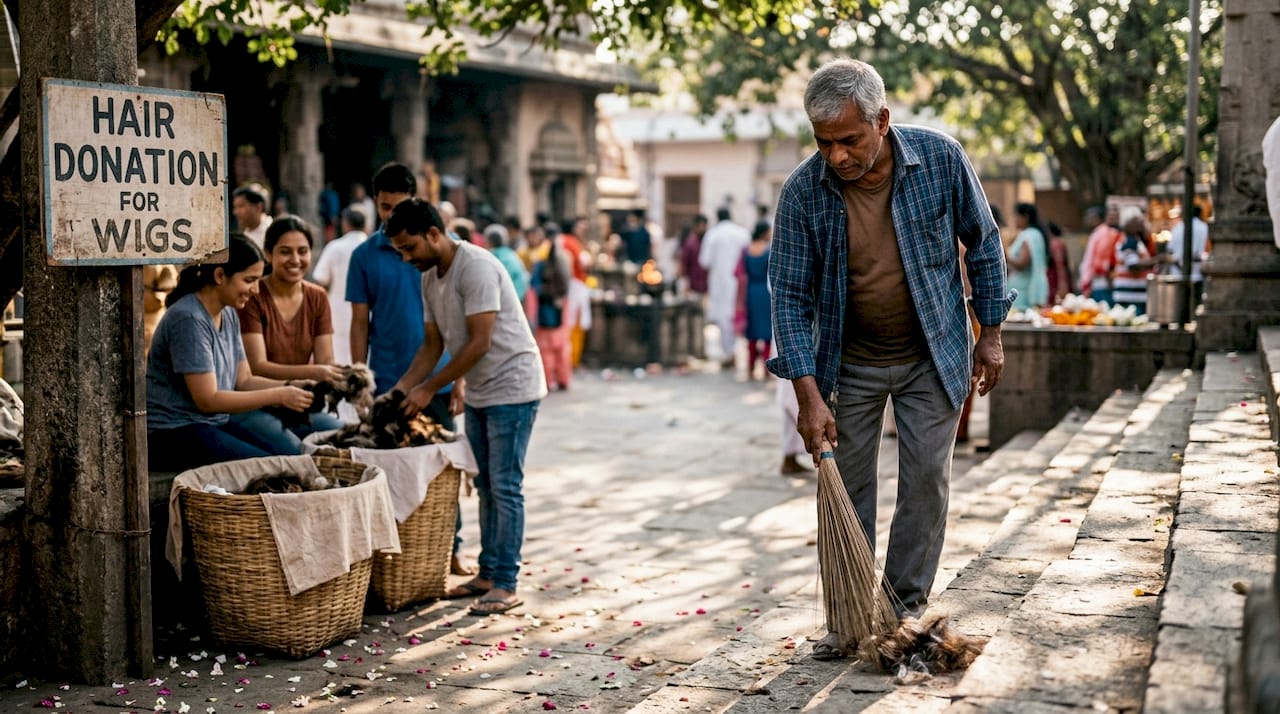
Two sourcing streams are widely recognised as more ethical than others. The first is temple hair donation, common in India, where devotees shave their heads as a religious offering. The second is direct purchase, where brands pay individual donors a fair, agreed price. Both approaches, when properly managed, align with virgin hair standards that prioritise natural, unprocessed quality.
Consumer demand is pushing the industry toward greater traceability and fair trade practices. Brands that cannot explain their supply chain are increasingly being called out. Here is what genuinely ethical sourcing looks like in practice:
- Informed consent: The donor freely chooses to provide hair
- Fair compensation: Payment reflects the value of the hair, not desperation
- Transparency: The sourcing region and method are clearly documented
- No child labour: All donors are adults
- Traceability: The hair can be tracked from source to sale
| Characteristic | Ethical sourcing | Unethical sourcing |
|---|---|---|
| Donor consent | Fully informed and voluntary | Coerced or uninformed |
| Compensation | Fair market rate | Little to none |
| Transparency | Documented supply chain | Vague or hidden origins |
| Child labour | Strictly prohibited | May be present |
| Traceability | End-to-end tracking | Untraceable |
Common ethical methods include voluntary temple donations in India and direct donor payments in other regions. As one investigation noted, up to 30% of mass-market hair is likely sourced exploitatively, which means the majority of budget extensions carry serious ethical questions.
“Up to 30% of mass-market hair is likely sourced exploitatively.” — ITV News investigation, 2025
The journey of ethically sourced hair
Now that we know what ethical sourcing means, it is helpful to follow the actual path ethically sourced hair takes to reach you. The journey is longer and more involved than most buyers realise, and each stage is where things can go right or wrong.
There are three main routes for ethical collection. Temple donations involve devotees at Hindu temples, particularly in South India, offering their hair as a spiritual act. Direct purchase programmes pay individual donors a negotiated fee. Organised fair trade groups work with communities to establish collective agreements and shared benefits.
Here is the typical lifecycle of ethically sourced hair:
- Donation or purchase: Hair is collected from a consenting adult donor, either through temple ritual or direct transaction
- Initial collection: Hair is sorted by length, texture, and quality at the source
- Processing: Hair is cleaned, sometimes steam-treated, but not chemically altered in raw or virgin products
- Quality control: Each batch is inspected for consistency, cuticle alignment, and integrity
- Documentation: Sourcing records are created and attached to the batch
- Distribution: Hair reaches manufacturers, then retailers, with traceability maintained
Certification and documentation at each stage are what separate genuinely ethical brands from those making empty claims. Great Lengths sources 100% from Indian temples; Remy Cabello buys directly, paying donors up to £200. These are real, verifiable commitments. You can learn more about responsible practices through raw hair sourcing and understand the quality difference in raw human hair benefits.
Pro Tip: Ask any brand you buy from to name their sourcing region and method. If they cannot answer clearly, that tells you everything you need to know.
| Sourcing region | Typical compensation | Transparency level |
|---|---|---|
| Indian temples | Religious offering, no cash | Moderate (institutional) |
| Direct purchase (India) | £50 to £200 per donor | High when documented |
| Eastern Europe (direct) | £100 to £300 per donor | High when documented |
| Unverified brokers | Minimal or none | Very low |
The temple hair donation model is one of the most studied, and while it has genuine ethical foundations, it is not without complexity, as we will discuss later.
Spotting red flags: Unethical hair sourcing practices
Given these careful sourcing steps, what should you watch out for to avoid unethical alternatives? The warning signs are often hiding in plain sight, and knowing them protects both your clients and your professional reputation.
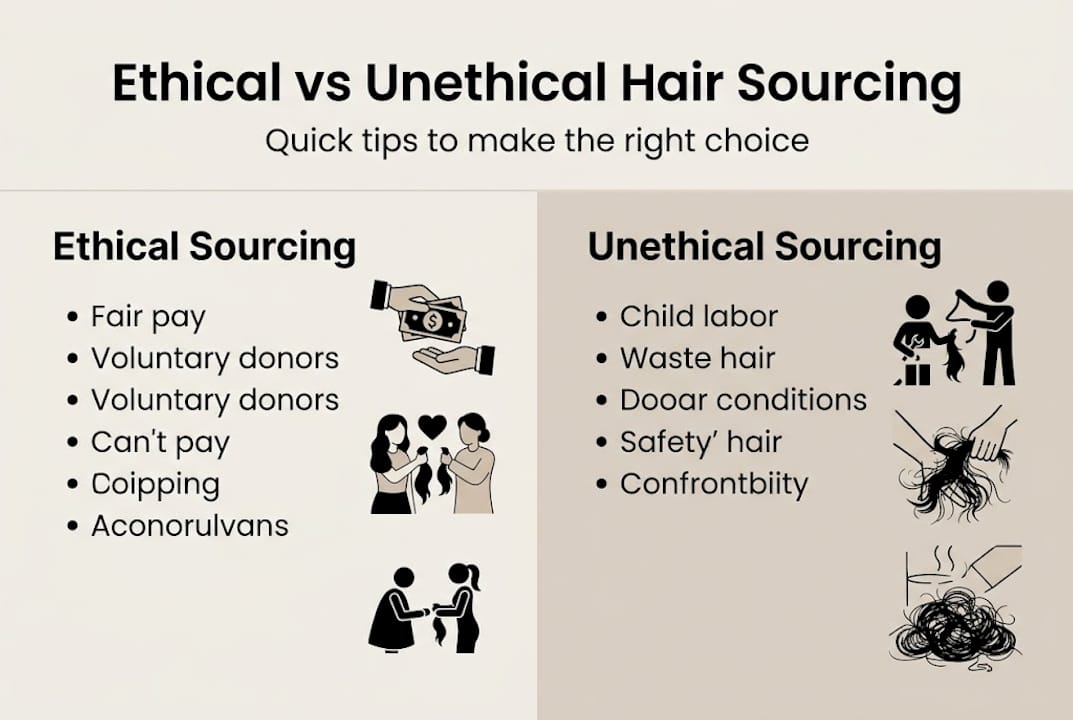
Unethical sourcing includes waste hair collected from brushes and salon floors, child labour in collection facilities, misleading marketing, and donors receiving little or no payment. These practices are more common in mass-market supply chains than the industry likes to admit.
One important nuance: the labels “Remy” and “virgin” are frequently misused. Remy technically means the cuticles are aligned in one direction, which reduces tangling. Virgin means unprocessed. Neither label, on its own, guarantees ethical sourcing. A brand can use both terms accurately while still sourcing from exploitative conditions.
The 30% exploitative sourcing estimate in the mainstream market is a sobering figure. It means roughly one in three budget extension purchases may be connected to harm. Knowing how to identify quality hair goes hand in hand with knowing how to identify ethical sourcing.
Here are the top red flags to watch for when shopping:
- No sourcing information: The brand cannot name a country, region, or collection method
- Unusually low price: Genuine ethical sourcing has a cost; rock-bottom prices often signal exploitation
- Vague labels only: Terms like “100% human hair” with no further detail are insufficient
- No certifications or documentation: Reputable brands can provide sourcing records
- Chemical odours: Strong smells suggest heavy processing to mask low-quality or mixed hair
- Inconsistent texture: Variation within a bundle may indicate blended or collected waste hair
If a brand cannot tell you where their hair comes from, assume the worst and shop elsewhere.
Ethical vs synthetic hair: What’s right for you?
Once you know the red flags, it helps to see how ethical human hair stacks up against synthetic alternatives. This is a genuinely complex comparison, and the right answer depends on your priorities.
Some professionals and ethical consumers prefer high-quality synthetic extensions precisely because they sidestep human sourcing entirely. No donor, no exploitation risk, no supply chain to question. Modern synthetic fibres have improved significantly and can mimic the look of natural hair for many applications.
That said, some argue no human hair sourcing can ever be fully ethical due to persistent power imbalances between buyers in wealthy markets and donors in lower-income regions. This is a legitimate concern worth sitting with.
For performance, styling versatility, and longevity, ethically sourced human hair remains the professional standard. You can heat-style it, colour it, and wear it for years with proper care. Synthetics, even premium ones, have real limitations. Understanding the key hair extension differences and the natural vs synthetic hair debate helps you advise clients with confidence.
| Factor | Ethical human hair | Synthetic hair |
|---|---|---|
| Sourcing risk | Low (if verified) | None |
| Price | Higher | Lower |
| Environmental impact | Lower (biodegradable) | Higher (plastic-based) |
| Look and feel | Natural | Variable |
| Traceability | Possible | Not applicable |
| Longevity | 1 to 3 years | 3 to 6 months |
Pro Tip: When you cannot verify a brand’s sourcing, certified synthetic extensions are a safer choice for clients with strict ethical requirements. Transparency is always the deciding factor.
The uncomfortable truth about ethical hair in 2026
Having explored the facts, it is time for a candid look at the bigger picture. We work closely with sourcing questions every day, and the honest answer is that the industry still has significant gaps.
Even temple hair, often held up as the gold standard of ethical sourcing, is not without complications. Not all temple donors are fully aware that their religious offering will be commercially sold, sometimes for thousands of dollars per kilogram. The spiritual act and the commercial transaction are not always transparently connected for the person making the donation.
Some experts argue that traceability is currently the only meaningful assurance buyers have, yet even that is rarely perfect. Documentation can be falsified. Supply chains can be obscured at the broker level. As one industry observer put it, unless you know the donor and the journey, there is always a grey area.
What this means practically is that your best protection as a buyer or stylist is to ask hard questions, choose brands that welcome those questions, and support virgin hair benefits backed by genuine sourcing transparency. Perfection is not available yet. But meaningful progress is, and every informed purchase moves the industry in the right direction.
Ethically sourced beauty: Your next step
Ready to be part of the solution? Making ethical hair choices starts with choosing brands that can actually answer your questions about sourcing, compensation, and traceability.
At Gaurash Hair, every product comes with clear sourcing information rooted in responsible Indian hair collection. Whether you are looking for ethically sourced wavy hair for a natural, textured look or Indian straight hair extensions for sleek, polished styles, you can shop with confidence knowing the supply chain behind every bundle. Our commitment to transparency and community impact means your beauty choices support real people, not exploitation. Explore our full range and feel good about every strand.
Frequently asked questions
How can I tell if hair extensions are ethically sourced?
Look for brands that openly share their sourcing region, collection method, and compensation practices. Ethical sourcing involves transparency and documentation at every stage, so a brand that cannot answer basic questions about origins is a brand worth avoiding.
What are the most common unethical hair sourcing practices?
Exploitation includes forced donations, child labour, collecting waste hair from floors or brushes, and paying donors little or nothing. 30% of mass-market extensions are linked to exploitative sourcing, making it a widespread issue rather than an isolated one.
Are synthetic hair extensions more ethical than human hair?
Synthetics avoid human exploitation entirely but are made from plastic-based fibres, which carry their own environmental costs. A growing shift toward synthetics exists as an ethical alternative, though the environmental trade-off is real and worth considering.
Does temple hair always count as ethically sourced?
Temple donations have strong ethical foundations when donors are genuinely informed, but not all temple donors are aware their hair will be commercially sold. It is one of the more ethical sourcing methods available, but it is not without nuance.
Recommended
- Indian Raw Hair Manufacturer: Quality, Sourcing, Impact – Gaurash Beauty Supply
- Raw Human Hair Explained: Authentic Beauty Benefits – Gaurash Beauty Supply
- 2025 Hair Extension Trends | Raw Indian Hair, Invisible Wefts & Luxury Styles – Gaurash Beauty Supply
- How to identify quality hair: 93% seek authentic extensions – Gaurash Beauty Supply
- Ethical sourcing in jewelry: 2026 guide for buyers – Eternal Carat