

Top ways to style hair extensions for salon looks
TL;DR:
- Proper extension selection and blending are key to achieving a natural look.
- Human hair extensions respond well to styling and require careful care and maintenance.
- Consultation and precise blending significantly enhance extension styling results.
Getting hair extensions to look truly seamless is one of the most satisfying challenges in hairstyling. Whether you’re a client wanting to switch up your length overnight or a professional stylist building a loyal clientele, the difference between extensions that look obvious and ones that look completely natural comes down to technique. This article walks you through every stage of the process, from selecting the right type of extension to mastering blending, styling, and aftercare. You’ll leave with practical, expert-approved methods that work in the salon and at home.
Table of Contents
- How to select the right hair extensions for styling success
- Seamless blending methods for a natural finish
- Styling ideas: From sleek straight to curly volume
- Care and maintenance: Keeping styles flawless longer
- Quick comparison: Popular styling techniques
- A stylist’s perspective: What really matters for standout extension styles
- Upgrade your extension game with premium options
- Frequently asked questions
Key Takeaways
| Point | Details |
|---|---|
| Select wisely | The right type, colour, and texture set the stage for easy, flawless styling. |
| Blend thoroughly | Proper blending and cutting make extensions look seamlessly natural. |
| Style creatively | You can use straightening, curling, updos, or braids to create endless looks. |
| Maintain with care | Careful washing, detangling, and storage keep styles looking fresh longer. |
| Premium extensions help | High-quality human hair extensions respond better to styling and last longer. |
How to select the right hair extensions for styling success
Before learning how to style, it’s essential to understand the selection process so your final look will be easy to achieve. The type of extension you choose shapes everything that follows, including how you blend, style, and maintain the hair.
The three most common types are:
- Clip-ins: Temporary, easy to apply at home, and ideal for occasional wear or experimenting with length and volume.
- Tape-ins: Semi-permanent, lying flat against the scalp for a discreet finish. Great for fine or medium hair types.
- Sew-ins (weaves): Long-lasting and secure, best suited for thicker natural hair and professional installation.
Colour matching is where many people go wrong. Hold the extension weft against your hair in natural light, not indoor lighting. Look for a match at the mid-shaft and ends rather than the roots, since that’s where extensions will sit. Texture matters just as much. Selecting the right type, colour, and texture is crucial to achieving a natural look, and skipping this step is the most common reason extensions look fake.
For thickness, choose extensions that match your natural hair’s density. Very fine hair paired with thick wefts creates an obvious bump at the attachment point. Length should complement your face shape, with longer lengths generally flattering oval and heart-shaped faces.
Pro Tip: Investing in 100% human hair is the single biggest factor in styling freedom. Human hair responds to heat, colour, and products just like your own strands. Synthetic alternatives melt under heat tools and cannot be coloured. When choosing hair extensions for long-term use, raw or virgin human hair is always worth the investment. You can also check out current extension trends to see what textures and lengths are most popular right now.
Seamless blending methods for a natural finish
Once you have chosen the right extensions, mastering the art of blending ensures your style looks completely natural. Even the best quality extensions can look mismatched without proper integration technique.
Follow these steps for a flawless blend:
- Section your natural hair into horizontal layers, starting from the nape of the neck upward.
- Place extensions starting at the lowest section, keeping wefts hidden under the layer above.
- Tease or backcomb lightly at each attachment point to give the extension something to grip.
- Release the next layer of natural hair over the extension weft to conceal it completely.
- Repeat upward, finishing at the crown with your lightest or shortest wefts.
- Blend with a wide-tooth comb or paddle brush, working from ends to roots.
Layering and trimming extensions is essential for a realistic finish. Point cutting, where you snip into the ends at a slight angle rather than cutting straight across, removes blunt lines that give extensions away. A few small snips along the perimeter make the boundary between your natural hair and extensions nearly invisible.
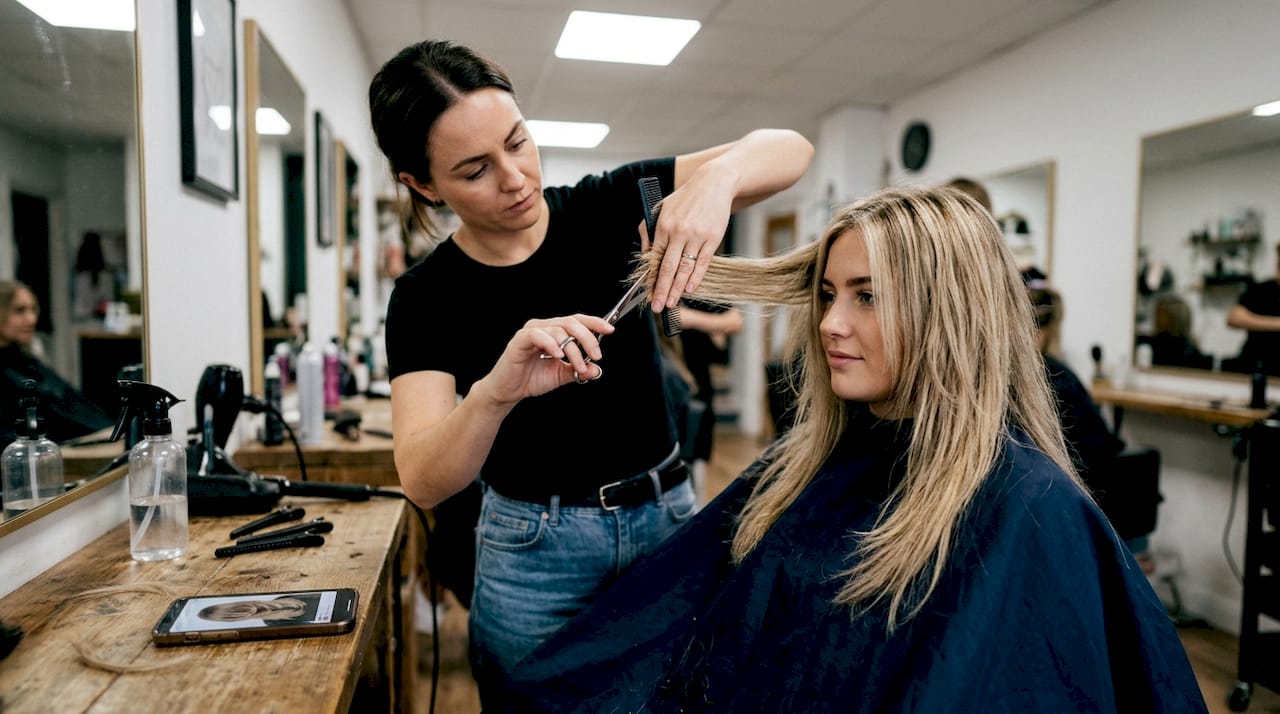
For straight hair, a flat iron pass over both your natural hair and the extension wefts together unifies the texture instantly. For wavy or curly styles, use a curling wand to wrap both together in the same direction. This is the fastest way to disguise any subtle colour or texture differences. Our guide on blending hair extensions covers this in more detail, and the clip-in blending guide is especially useful for at-home users.
Pro Tip: Avoid placing wefts too close to the hairline at the temples or nape. These areas are visible and thin, so extensions placed there tend to show. Keep wefts at least two centimetres away from the perimeter for a natural result. Also visit our bundles blending success resource for bundle-specific blending advice.
Styling ideas: From sleek straight to curly volume
With a flawless blend, it’s time to explore creative styling possibilities for every taste and event. The good news is that human hair extensions can be safely styled with heat tools just like your own hair, which opens up a wide range of looks.
Here are the most popular styles and how to achieve them:
- Sleek straight: Use a flat iron set between 180°C and 200°C. Always apply heat protectant first. Work in small sections from underneath, pressing slowly for a glassy finish.
- Beachy waves: Wrap two-inch sections around a 32mm barrel curling wand, alternating direction. Shake out gently and finish with a light-hold spray.
- Bombshell curls: Use a smaller 19mm barrel for tighter ringlets. Clip each curl to cool before releasing for longer-lasting definition.
- Sleek ponytail: Pull all hair back and secure with a clear elastic. Wrap a small weft around the base to conceal the band. Ponytail extensions are a major trend right now.
- Braided styles: Extensions add the thickness needed for full, voluminous braids. Three-strand, fishtail, and Dutch braids all work beautifully.
- Buns and updos: Twist hair into a low or high bun and pin sections for a polished event look.
Pro Tip: Always section your hair and start styling from the bottom layer upward. This ensures every section gets equal heat and attention, and the finished look is consistent from root to tip. For more inspiration, explore salon extension styling tips and see how hairstyling trends are evolving. You can also discover how extensions can completely transform your look beyond just adding length.
Care and maintenance: Keeping styles flawless longer
Even the most beautifully styled extensions require proper aftercare to maintain their flawless appearance. How you care for your extensions directly impacts their look after styling, and good habits dramatically extend their lifespan.
Key care habits to build:
- Wash gently: Use sulphate-free shampoo and work it through in a downward motion. Never scrub in circles, as this causes matting.
- Condition from mid-shaft to ends: Avoid applying conditioner at the roots or bond attachment points, especially for tape-ins.
- Detangle before washing: Always remove knots with a wide-tooth comb before wetting extensions. Wet tangled hair is far more prone to breakage.
- Air-dry when possible: Excessive heat drying shortens the lifespan of extensions. If you must blow-dry, use a low heat setting and a diffuser for curly textures.
- Sleep protected: Braid extensions loosely or wrap in a silk scarf before bed. A silk pillowcase also reduces friction and frizz overnight.
| Extension type | Wash frequency | Detangling method | Sleep protection |
|---|---|---|---|
| Clip-in | Every 15–20 wears | Dry, before application | Remove before sleeping |
| Tape-in | Every 10–15 wears | Dry, gentle brush | Loose braid or silk wrap |
| Sew-in | Every 7–10 days | Wet with care, wide-tooth comb | Silk scarf or bonnet |
For a full breakdown of maintenance by hair type and texture, the extension care guide is an excellent resource to bookmark.
Quick comparison: Popular styling techniques
For a summary of the main methods, see how popular styling choices compare head-to-head. Certain techniques work best for specific extension types, and matching your method to your lifestyle saves time and protects your investment.
| Technique | Best for | Skill level | Time required | Maintenance |
|---|---|---|---|---|
| Sleek straight | Daily wear, fine hair | Beginner | 15–25 min | Low |
| Beachy waves | Casual, everyday | Beginner | 20–30 min | Low |
| Bombshell curls | Events, volume | Intermediate | 30–45 min | Medium |
| Braids | Protective, long-lasting | Intermediate | 30–60 min | Low |
| Updos/buns | Formal events | Intermediate | 20–40 min | Low |
| Sleek ponytail | Quick, polished | Beginner | 10–15 min | Low |
For quick daily looks, sleek straight and beachy waves are your best options because they require minimal tools and hold well throughout the day. For special events, curls and updos offer longevity and visual impact. Braids are the clear winner for protective styling because they keep extensions secure for days without requiring daily restyling.
Key takeaways from the comparison:
- Beginners should start with straight or wave styles before attempting updos.
- Curling techniques require more practice but deliver the most dramatic results.
- Braids and buns are the most time-efficient for multi-day wear.
Exploring salon extension roles gives you a broader understanding of how professionals use these techniques across different client needs.
A stylist’s perspective: What really matters for standout extension styles
After seeing all the practical options, here’s a perspective you won’t find in most guides. The truth is, the biggest gap between good extension styles and truly standout ones has nothing to do with the tools or even the products. It comes down to consultation and planning before a single clip is placed.
Many stylists, even experienced ones, skip the face shape and lifestyle conversation. They focus on what looks good in photos rather than what works for a client’s daily routine. Someone who washes their hair every other day and goes to the gym five times a week needs a completely different approach than someone attending monthly events. Extensions styled without that context will always look slightly off, even if the technique is flawless.
The other thing that gets overlooked is the transition zone. The area where your natural hair meets the extension is where most styles fall apart. Spending an extra five minutes on point cutting and blending that zone, rather than rushing to the styling phase, is what separates a professional result from an amateur one. Reviewing flawless extension results can reinforce why that detail matters so much. Great extension styling is 40% selection, 40% blending, and only 20% the actual styling.
Upgrade your extension game with premium options
Putting these techniques into practice is far easier when you start with extensions that are genuinely high quality. Every blending, styling, and care method covered in this article works best with 100% human hair that responds naturally to heat and products.
At Gaurash Hair, you’ll find ethically sourced, raw Indian human hair in every texture you need. Whether you’re after the polished finish of straight human hair extensions, the effortless movement of wavy hair bundles, or the bold volume of curly hair bundles, there’s a premium option ready for your next style. Salon professionals and home stylists alike trust Gaurash Hair for consistent quality, natural softness, and extensions that hold up beautifully through every technique in this guide.
Frequently asked questions
Can you use heat tools on all types of hair extensions?
Human hair extensions can be safely styled with heat tools, but always use a heat protectant and check the manufacturer’s guidelines first. Synthetic extensions cannot tolerate heat and will melt or become permanently damaged.
What’s the best way to keep styled hair extensions tangle-free?
Regular gentle brushing from ends to roots and protective sleep routines help prevent tangling. How you care for your extensions directly impacts their look after styling, so consistency matters.
How do I blend different extension textures with my natural hair?
Choose extensions that match your natural texture, or use heat tools to unify both. Layering and trimming extensions is essential for a realistic finish at the transition zone.
Are some extension styling methods better for special events?
Updos, curls, and sleek looks hold beautifully for events, while braids and buns are popular long-lasting choices. Certain techniques work best for specific extension types, so match your method to the occasion.
How often should hair extensions be washed when styled?
Wash extensions every 10 to 15 wears using gentle, sulphate-free shampoo. How you care for your extensions between washes, including brushing and protective sleeping habits, is just as important as the wash itself.
Recommended
- Salon hair extension tips for flawless, natural results – Gaurash Beauty Supply
- Transform your look: The true role of hair extensions – Gaurash Beauty Supply
- Role of hair extensions in salons: benefits 2026 – Gaurash Beauty Supply
- 7 Types of Hair Extensions for a Natural Look Explained – Gaurash Beauty Supply