

Understand hair extension density for natural, fuller styles
TL;DR:
- Density measures how thick and full hair extensions appear, affecting natural look and blending.
- Matching extension density to natural hair ensures a seamless, believable result while considering styling needs.
- Proper density selection impacts comfort, maintenance, and longevity of hair extensions.
Not all hair extensions deliver the same fullness, and that gap often comes down to one factor most people overlook: density. Whether you’re a professional stylist building your consultation process or someone searching for extensions that genuinely blend with your natural hair, density is the detail that separates a seamless result from something that looks obviously added on. It describes how thick and full a weft or bundle actually is, and getting it wrong means even the most expensive hair can look artificial. This article unpacks what density means, how it’s measured, and how to match it perfectly to your needs.
Table of Contents
- What is hair extension density?
- Density options: Standard types and what they look like
- How to choose the right density for natural-looking results
- Styling, maintenance, and durability: The role of density
- Professional tips for flawless density consultations
- Why choosing the right density is the real secret to natural extensions
- Ready to find your perfect density?
- Frequently asked questions
Key Takeaways
| Point | Details |
|---|---|
| Density defines fullness | Extension density directly impacts the look, volume, and natural blend with your own hair. |
| Not one size fits all | Choosing the right density depends on your hair type, goals, and lifestyle preferences. |
| Professional assessment matters | Salon consultations with density in mind can prevent unnatural results and increase satisfaction. |
| Styling and care shift by density | Heavier densities look luscious but need more maintenance, while lighter options are easier to manage. |
What is hair extension density?
Density, in the context of hair extensions, refers to the amount of hair packed into a single weft, bundle, or unit. Think of it as the difference between a thin paperback and a thick hardcover. Both are books, but one has considerably more substance. As noted in hair extension tips, “density describes the thickness, fullness, and volume of hair extensions,” which makes it the single most important factor in how natural your final look will appear.
Density is typically expressed as a percentage or by weight in grams. A 100% density is considered standard or medium, while options above 150% move into fuller, more voluminous territory. Here’s a quick overview:
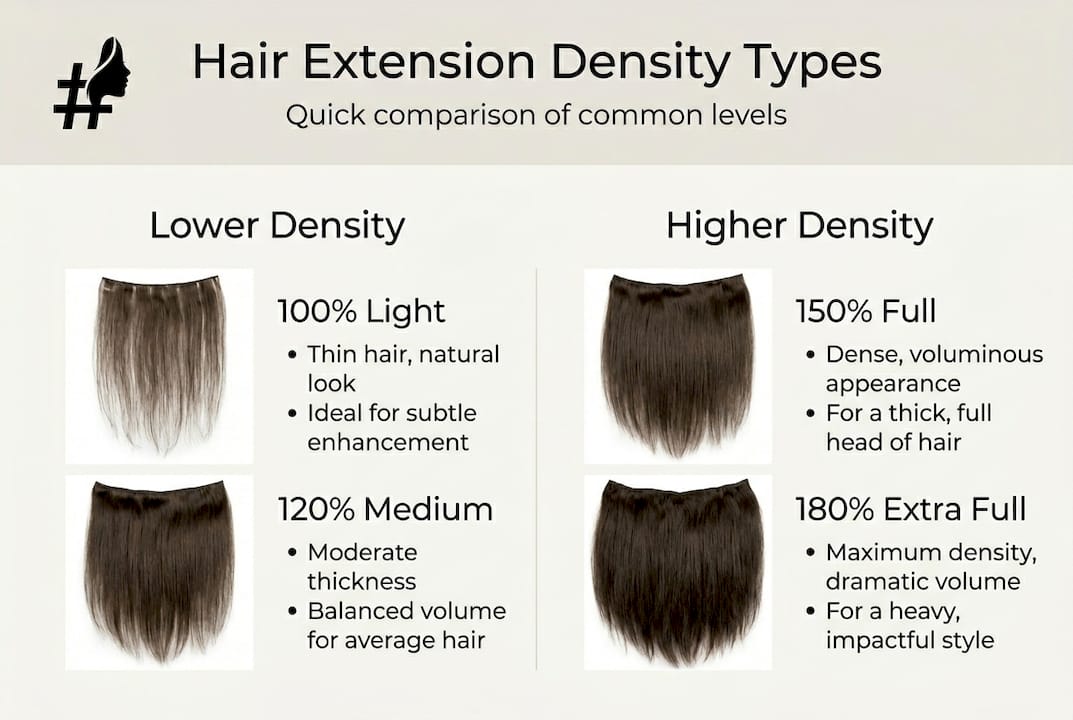
| Density level | Description | Best for |
|---|---|---|
| 100% | Natural, lightweight | Fine to medium hair |
| 120% | Slight added volume | Medium hair, everyday wear |
| 150% | Full and lush | Thick hair, added glamour |
| 180% | Very full | Dramatic styles, photo shoots |
| 200%+ | Ultra dense | Stage, editorial, maximum volume |
Key things density affects:
- Blending: Extensions must match or closely complement your natural hair’s thickness to avoid a visible line between real and added hair.
- Weight: Higher density means more weight on the scalp, which affects comfort over long wear.
- Styling versatility: Fuller extensions hold curls and waves more dramatically.
- Cost: More hair per weft typically means a higher price point.
Pro Tip: When in doubt, match your extension density to your natural hair’s thickness first, then add one level up if you want a subtle volume boost. Going two or more levels higher almost always looks unnatural.
“Density is the foundation of a believable extension look. Without the right match, no technique or product can fully compensate.” Following beauty business best practices means making density a standard part of every client intake conversation.
Density options: Standard types and what they look like
Understanding the numbers is one thing. Seeing how each density level actually transforms a look is where the real clarity comes in. As highlighted in guides for choosing hair extensions, “not all density levels suit every client or style; visual guides assist in the consultation.”

Here’s how each standard density level plays out in real life:
| Density | Visual effect | Ideal client profile |
|---|---|---|
| 100% | Natural, barely-there fullness | Fine hair, first-time wearers |
| 120% | Gentle volume boost | Medium hair, natural everyday look |
| 150% | Noticeably fuller, lush finish | Thick hair, special occasions |
| 180% | High volume, bold presence | All hair types, glamour styles |
| 200%+ | Maximum drama and volume | Editorial, stage, or performance |
To assess which density suits your client or yourself, follow these steps:
- Evaluate natural hair thickness. Run a single strand between your fingers. Fine hair is barely felt; coarse hair has a clear, substantial texture.
- Identify the style goal. Is the aim to restore lost volume, add length, or create a completely transformed look?
- Consider the occasion. Everyday wear calls for comfort and ease, while special events allow for bolder, heavier options.
- Check lifestyle factors. Active clients or those with limited styling time do better with lighter densities.
- Review reference images together. Visual confirmation prevents mismatched expectations.
Industry surveys consistently show that 120% to 150% density is the most frequently requested range in salons, covering the widest variety of clients and styles. Exploring the full range of types of hair extensions alongside density knowledge gives you a far more complete picture before committing to a purchase.
How to choose the right density for natural-looking results
Choosing the right density is less about personal preference and more about honest assessment. Aligning extension density with your natural hair is key for flawless blending, which means the process starts with knowing your own hair well.
Use this checklist before selecting a density:
- Natural hair thickness: Fine, medium, or coarse?
- Scalp hair density: Is hair sparse at the roots or consistently full?
- Hair goals: Subtle boost, everyday fullness, or dramatic volume?
- Maintenance comfort: How much time do you realistically spend styling each day?
- Lifestyle: High activity levels, swimming, or frequent heat styling all affect which density holds up best.
Here’s a practical guide to matching density with goals:
| Hair goal | Recommended density | Why it works |
|---|---|---|
| Subtle volume boost | 100% to 120% | Blends without obvious added weight |
| Everyday fullness | 120% to 150% | Balanced volume, manageable upkeep |
| Dramatic transformation | 150% to 180% | Visible impact, holds styles well |
| Maximum volume | 180% to 200%+ | Bold results, requires more maintenance |
Pro Tip: One of the most common mistakes is overestimating how much fullness you actually want. Clients often request heavy density based on inspiration photos, then find the result feels too thick or heavy for daily wear. Always start conservatively. You can layer or add more; you cannot easily reduce density once installed.
For those preparing natural hair before installation, the condition and strength of your existing hair also plays a role. Fragile or thinning hair may not support heavier densities comfortably.
Styling, maintenance, and durability: The role of density
The density you choose does not just affect how your hair looks on day one. It shapes your entire daily routine for as long as you wear the extensions. As outlined in this guide on hair extension durability, “density directly influences how extensions behave during styling and their upkeep requirements.”
Heavier extensions take longer to blow-dry, require more product to stay moisturised, and need more careful detangling to avoid matting. Lighter densities are faster to manage but may need more frequent touch-ups to maintain volume.
Quick maintenance strategies by density level:
- 100% to 120%: Light leave-in conditioner, minimal detangling time, air-dry friendly.
- 150%: Weekly deep conditioning, gentle wide-tooth comb, moderate heat styling.
- 180% to 200%+: Daily moisture, sectioned detangling, dedicated drying time of 45 minutes or more.
Durability also shifts with density. Higher density extensions contain more hair, which can mean longer lifespan if cared for properly. However, more hair also means more friction, more tangling risk, and greater strain on attachment points. Lower density options often last just as long with less effort.
“Many clients come back after their first high-density install saying they loved the look but couldn’t keep up with the upkeep. That’s a conversation that should happen before installation, not after.” Exploring the salon extension benefits of professional consultation helps set realistic expectations from the start.
Professional tips for flawless density consultations
A great density recommendation starts with a great conversation. Consultation quality impacts extension success, and thorough discussion of density choices is essential for both stylists and clients.
Ask these questions during every density consultation:
- What does your daily styling routine look like?
- Have you worn extensions before, and how did they feel?
- Are you looking for a natural result or a more dramatic transformation?
- How much time can you dedicate to maintenance each week?
- Do you have any scalp sensitivity or hair thinning concerns?
Assessment techniques that sharpen your recommendations:
- Strand test: Pull a small section of natural hair to assess its thickness and strength.
- Density comparison swatch: Hold sample wefts against the client’s natural hair in natural lighting.
- Photo review: Use before-and-after images at different density levels to anchor expectations.
- Touch test: Let the client feel the weight of different density bundles before committing.
Pro Tip: Revisit density recommendations when seasons change or when a client’s hair goals shift. Summer often calls for lighter densities due to heat and humidity, while winter styles may welcome fuller options. Keeping density consultations dynamic rather than one-time decisions builds trust and better long-term results. Tools that boost booking efficiency also help salons schedule regular density check-ins as part of ongoing client care.
Why choosing the right density is the real secret to natural extensions
Most people obsess over length and colour when selecting extensions. They spend hours comparing shades and measuring inches, then wonder why the result still looks off. The honest answer is almost always density.
Even the finest, most ethically sourced raw Indian hair will look artificial if the density does not match the wearer’s natural hair. It creates a visible disconnect at the root, an unnatural weight distribution, and a silhouette that reads as “added on” rather than grown in. Length and colour are visible. Density is felt.
The industry truth is that density is the invisible foundation of every successful extension look. We have seen clients with modest budgets achieve stunning, completely believable results simply because the density was matched correctly. We have also seen premium installs fall flat for the exact opposite reason.
The fix is not complicated. It requires honest assessment, clear communication, and a willingness to prioritise fit over the fantasy of maximum volume. Using natural blending techniques alongside the right density choice is what turns a good result into a genuinely undetectable one. That is the standard worth aiming for.
Ready to find your perfect density?
Now that you understand how density shapes every aspect of your extension experience, from how it looks to how it feels and how long it lasts, you are ready to make a genuinely informed choice.
At Gaurash Hair, every product is crafted from 100% raw and virgin Indian human hair, giving you a natural base that responds beautifully to the right density match. Whether you prefer the sleek finish of straight hair extensions or the bold texture of curly hair bundles, our collections are designed to help you achieve the seamless, luxurious result you are looking for. Browse our range and find the density that works for your hair and your life.
Frequently asked questions
How do I measure hair extension density?
Hair extension density is measured as a percentage or by the weight of hair per weft, with higher percentages indicating fuller volume.
Which density is best for very fine natural hair?
Lower densities like 100 to 120% blend best with fine natural hair, ensuring a seamless and comfortable look.
Do higher density extensions require special maintenance?
Yes, fuller extensions require more styling and upkeep because density affects maintenance demands, including longer drying times and more careful detangling.
Can I mix densities for a custom look?
Yes, mixing densities can create a tailored result, and blending techniques can be used to achieve a seamless appearance when combining different density levels.
Recommended
- 7 Types of Hair Extensions for a Natural Look Explained – Gaurash Beauty Supply
- Why prefer wavy hair extensions for natural volume – Gaurash Beauty Supply
- How to Choose Hair Extensions for a Natural, Lasting Look – Gaurash Beauty Supply
- Salon hair extension tips for flawless, natural results – Gaurash Beauty Supply